Tuesday, April 12, 2011

Court: Harvard Twins Stuck With Facebook Agreement


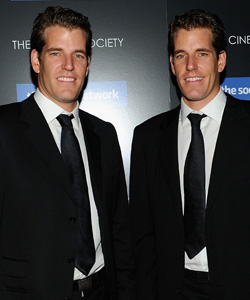
Photo by Jamie McCarthy/Wireimage.comSAN FRANCISCO – A federal appeals court ruled Monday that former Harvard University schoolmates of Facebook founder Mark Zuckerberg can't undo their settlement over creation of the social networking site.


The 9th U.S. Circuit Court of Appeals said Monday that Tyler and Cameron Winklevoss were savvy enough to understand what they were agreeing to when they signed the agreement in 2008. The deal called for a $20 million cash payment and a partial ownership of Facebook.

A third classmate, Divya Narendra, was part of the settlement with the twins but did not pursue the second lawsuit seeking to undo the agreement.


Monday's ruling upholds a lower court decision enforcing the settlement during the six years of litigation that grew so contentious that the dispute was dramatized in the Oscar-nominated film, "The Social Network."


The settlement is now worth more than $160 million because of Facebook's increased valuation.


Share/Bookmark

Rare Civil War Photos Document Life Between Battles

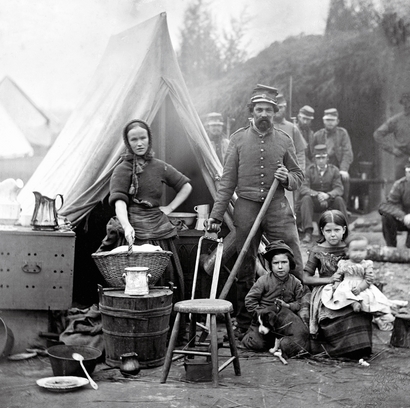
America's Civil War, whose 150th anniversary is marked on Tuesday, is so often described in battles — the Battle of Gettysburg, the Battle of Bull Run, the Battle of Fort Sumter — that it may be easy to forget that the soldiers who fought in the four-year war had a lot of time between fighting. The rare photos seen below document just that — the time soldiers spent waiting, preparing, recovering or just living.

"We wanted to show more of the daily life of these people and remind people that they were living their lives n the middle of this horrible war and there was a lot of daily living going on," says Kelly Knauer, editor of 

He points out that because of where camera technology was at the time, the in-between was much of what was photographed during the Civil War, since battle scene photos would often come out too blurry. The war marks one of the first times dead bodies were photographed. Another thing that comes out of some of the photos is a time truly left in the past, when family members and nearly entire towns would travel with the men to their battlegrounds.

As Knauer notes: "When they went to war, they took their whole families with them."
Wives and children followed their husbands 

Wives and children sometimes followed their husbands to war, particularly in the early period of the conflict. “(The soldiers) were in the camp, and the women were right there and the kids were right there.

Share/Bookmark

Obama First To Put Tax Increases On Budget Table

WASHINGTON – Higher taxes have been missing from the fierce budget battle that nearly shut down the federal government. But President Barack Obama is about to put them on the table — at least a modest version that he had pushed before and then rested on the shelf.
Most economists and budget analysts say a comprehensive mix of spending cuts and tax increases is essential to any viable deficit-reduction plan. Yet few players in the negotiations have gone there.

It comes in the scramble to heed what is widely viewed as a loud clamor from voters to slam the brakes on runaway government spending. There has been no corresponding public demand for raising taxes. That's not surprising, but the top-bracket U.S. tax rate now is the lowest it's been in decades, and it's far lower than those in many other industrialized countries, especially in western Europe.
Tax elements of Obama's broad deficit-reduction plan, to be laid out in a speech Wednesday, seem likely to revive his earlier proposals.

The president is expected to bring back his recommendation, first made in the 2008 campaign, to end Bush-era tax cuts for households earning over $250,000 a year. He temporarily set it aside when he signed onto a late 2010 agreement with Republicans to extend all Bush tax cuts for two years.

However, he did renew the bid earlier this year in his budget for the 2012 fiscal year that begins Oct. 1.
Any comprehensive deficit-reduction plan must include a mix of spending cuts and tax increases, experts argue from both sides of the political spectrum.


Share/Bookmark

Debate Stirred Over 1st Major US Tar Sands Mine


SALT LAKE CITY – Beneath the lush, green hills of eastern Utah's Uinta Basin, where elk, bear and bison outnumber people, the soil is saturated with a sticky tar that may soon provide a new domestic source of petroleum for the United States. It would be a first-of-its kind project in the country that some fear could be a slippery slope toward widespread wilderness destruction.

With crude prices surging beyond $100 a barrel, and politicians preaching the need to reduce America's reliance on foreign supplies, companies are now looking for more local sources. One Canadian firm says it's found it in the tar sands of Utah's Book Cliffs.

Alberta-based Earth Energy Resources Inc. aims to start with a roughly 62-acre mine here to produce bitumen, a tar-like form of petroleum, from oil-soaked sands. For decades, other Utah operators have used oil sands as a poor-man's asphalt, and Canada has been wringing oil from the ground for years, but nobody has yet tried to produce petroleum from U.S. soil on such a scale.
And it could be just the beginning. The company has over 7,800 acres of Utah state land under lease, with plans to acquire more, and estimates its current holdings contain more than 250 million barrels of recoverable oil.

"This is not just a 62-acre project that will last seven years. We are looking at a 30,000-acre project that will destroy the environment in this area over many years," said John Weisheit, a Colorado River guide and founder of the Moab, Utah-based environmental group Living Rivers.
Weisheit worries that shortsightedness and the rush to feed America's insatiable appetite for oil could trump reason at the expense of other precious natural resources.

The Bureau of Land Management says Utah has an estimated 12 to 19 billion barrels of oil buried in its tar sands, mostly in the eastern part of the state, though not all of that would be accessible.
Weisheit says if Earth Energy is allowed to mine the land, he fears others may not be far behind.

Share/Bookmark

9 Secrets Health Insurers Don't Want You To Know


 Health insurance companies like to keep secrets. And they like to save money. Example: You have surgery, and weeks later you get a bill for using an out-of-network anesthesiologist. Ridiculous, right? You didn’t choose who put you under, so you shouldn’t have to pay extra. But your insurer sent the bill anyway, hoping you wouldn’t notice.

Fighting back against this kind of trickery—and winning—is a lot easier than you think, says Kevin Flynn, the president of Healthcare Advocates, a Philadelphia-based firm that helps patients wrangle with their health plans. We checked with Flynn and other insurance-industry insiders, lawyers, doctors, and regulators to uncover nine little-known ways to get the health coverage you deserve—for less.

Don’t pay if you don’t have a say

When you purposely see an out-of-network doctor, your plan usually makes it clear that it’ll cost you. But when you have surgery, the hospital chooses the anesthesiologist. If you get that annoying “out-of-network” bill, Flynn says, draft a strongly worded letter stating you had no say about the anesthesiologist—in-network or otherwise—and, therefore, won’t pay any additional fees.

“If you don’t have direct control, you are not liable,” Flynn says, adding that this tactic is likely to work every time, but few consumers know about it.

You may be eligible for more coverage

Depending on your state, you could be eligible for more benefits than your plan is telling you about. Take Maryland, for instance. Health plans operating there must pay for expensive infertility coverage. But one state over, in Virginia, they don’t. It’s unlikely that your plan is trumpeting info about state-mandated coverage, though. It’s up to you to get the scoop.

One good place to check is Families USA, a consumer group that keeps tabs on state rules, suggests Kevin Lembo, Connecticut’s official health-care advocate for consumers. Another option: Contact your state’s insurance commissioner.


To get tested, talk up your symptoms

Your insurer doesn’t want to pay for a colonoscopy if it thinks it’s not necessary. But if you believe you need one, here’s how to get it covered: Talk to your doctor in detail about your symptoms and why you think you need the test. Your plan has to pay for it if you have gastro complaints, health experts say. (Only 21 states require insurers to cover colonoscopies for general screening.)

Stall first, answer questions later

When Wendy Decenzo became pregnant with twins, she wasn’t worried about health insurance. Her husband, Chris, had made sure to get a health plan that covered pregnancy well before they started trying. But when Wendy began going for prenatal visits, coverage was denied. Their plan, Blue Cross of California, wouldn’t say why. Instead, the insurer asked the Decenzos to sign release forms allowing the plan to view their medical histories, which the law says are private.

Chris believes the company was looking for any info that the Decenzos may have accidentally omitted when they applied for coverage. If an omission were to be found, the couple might have been denied coverage. “It seemed like a fishing expedition in order to deny us,” Chris says. So they refused to sign, and three months later the plan started paying for the prenatal appointments, even going back and paying for earlier visits that hadn’t been covered. Flynn says lots of insurers try this trick, but since their review process usually lasts only 60 to 90 days, they often drop the inquiry after that. Sometimes, procrastination pays.


Letters are your best bet


It may seem a bit inconvenient, but the old-fashioned letter is by far the best way to communicate with your health plan. “Don’t do anything over the phone. It takes forever and when you’re done there’s no record of it, so it didn’t happen,” says Rhonda Orin, a Washington, D.C.–based attorney and the author of Making Them Pay: How to Get the Most From Health Insurance and Managed Care.

Letters almost always get a response, adds Lembo, the Connecticut health-care advocate. Some plans will answer email, but many won’t. And to whom, exactly, should you address your mail? Experts recommend following your plan’s appeal process for letters and sending copies to your state insurance commissioner. Also, keep copies of every letter you’ve sent your plan and everything they’ve sent back. That way, when your insurer says, “We never said we’d cover that,” you can say, “I have it right here in writing.”

Doctors can be good weapons

You just got four massage sessions, under doctor’s orders, for lower-back pain—but your insurer refuses to pay for them? Ask your doctor for help. He can tell the insurer he’s going to complain to the state board that regulates health plans.

“Health plans may not fear you, but they do respect the board,” says James Moss, MD, a retired Kentucky surgeon. He intervened on a patient’s behalf and, by pressuring the board, helped the patient win coverage. Another option: Say you’ll call your congressman and/or state Medicare office to lodge a formal complaint, Dr. Moss says.

Caveat: Don’t actually contact your state board yourself if a claim is denied. Janice Weiss, a Jupiter, Fla.–based attorney who fights health plans for consumers, says some of her clients who went this route ended up hurting their cases when the state agency ruled their claims invalid; that left them little recourse with their insurance companies. Instead, while working your plan’s appeals process, just suggest you may take the matter to your state.

A little research can go a long way

If you want a special CT scan or MRI, your doc probably won’t authorize it unless it’s an absolute must. Persuade her with expert info from the American College of Radiology's Appropriateness Criteria, says Anne Roberts, the executive vice chair of the department of radiology at the University of California, San Diego.

Used primarily by doctors but open to the public, it’s an up-to-date list of the types of imaging that are right for various conditions. Arming yourself with the info doesn’t guarantee coverage, but it’s a proactive step in the right direction.

There are ways to get drugs cheaper

Doctors are often wowed by the latest and greatest drugs, which tend to be the most expensive. Make sure these newer, high-end meds are what you need before you leave the doctor’s office. Sometimes your insurance plan won’t pay for them at all; other times it’ll charge higher co-pays.

In many cases, drugs have generic versions that are just as effective but cheaper than the newer ones. Always ask your doc (or pharmacist) for generics. And if you really need a medicine that doesn’t have a generic version, order it by mail. Many plans have a less-expensive mail-order pharmacy option. Another prescription trick for people who have chronic conditions like allergies: Ask your doc to write you a prescription for two or three months’ worth of medication instead of one. Good-bye, extra co-pays.


An advocate can help you win

Imagine being turned down for coverage after running up $125,000 in medical bills. That’s what happened to the parents of a daughter with anorexia just before they sought help from Kevin Flynn, of Healthcare Advocates. For $400, he took over the fight with their insurer and—after a year’s worth of combat—won.

Flynn is a patient advocate, part of a growing industry that makes its money from helping you. Some advocates help you interact with your doctor, while others specialize in insurance disputes. Most of all, firms like Flynn’s keep the letters going out on your behalf, saving you time, energy, and headaches. “The insurers know that advocates know the laws, the regulations—things a regular consumer might not know. That makes them nervous,” Flynn says.

Advocates can even get policies changed. One of Flynn’s clients, who had rectal cancer, was having trouble getting his insurance plan to pay for a new radiation therapy. The insurer claimed the treatment wasn’t ready for prime time, but Flynn found six studies showing its usefulness for the disease, got the coverage—and got the insurer to rewrite its policy.

To find an advocate, contact the Patient Advocate Foundation, says Laura Weil, the interim director of Sarah Lawrence College’s Health Advocacy Program. Another helpful resource is the Society for Healthcare Consumer Advocacy.

Also try checking with the medical association for a particular condition, like the Multiple Myeloma Association or the National Association of Anorexia Nervosa and Associated Disorders; many of these groups keep lists of advocates.

Share/Bookmark

5 Worst Drive -Thru Foods

How much time did you spend in your car last week? Ten hours? Fifteen maybe? Wow, that sounds like a lot. But it's still probably an underestimate: As it turns out, the average American now spends 21 hours per week stuck inside a mobile metal box.
No wonder the drive-thru is so appealing. All those hours spent in traffic leaves scarcely any time to sit and eat. Add to that the stress of daily life and the desire to feel like you're accomplishing something while you drive, and you've got a pretty good case for turning the center console into a dining table.

But that convenience comes at a cost. A 15-year study published in the British journal Lancet found that those who ate fast food two or more times per week gained an average of 10 more pounds than those who ate fast food less than once a week. But it doesn't have to be this way. In my latest book, The Eat This, Not That! No-Diet Diet, I teach you how to navigate fast-food menus and make sure the meal coming at you through your car window won't necessitate a loosening of your seatbelt. The first step: Avoid the 5 foods on this list.

1. WORST SIDE DISH

Taco John’s Potato Ole’s (Large)
770 calories
46 g fat (6 g saturated, 1 g trans)
2,200 mg sodium

Interspersed throughout the menu in various permutations, these glorified tater tots pack a serious one-two punch. The combination of saturated fat and sodium puts a heavy strain on your heart, and the 770 calories test the durability of your belt buckle. Not even the indulgent Meat and Potato Burrito touts numbers this abysmal. Instead, opt for a side of Refried Beans. Order it without cheese and you'll cut 60 calories, but you'll hold on to the amazing 11 grams of fiber and 15 grams of protein.

Eat This Instead!
Taco John’s Refried Beans (without cheese)
260 calories
1.5 g fat (0.5 trans)
940 mg sodium


2. WORST DESSERT

Dairy Queen Double Fudge Cookie Dough Blizzard (Large)
1,350 calories
58 g fat (28 g saturated, 1.5 g trans)
133 g sugars 

This dessert ought to be served with a life insurance application. The problem is, the rest of the Blizzards aren't much better—even the smalls tend to hover around 500 calories. Splitting one of those isn't so bad, but if you prefer to have your own treat, go for a sundae instead. The best approach is to pick the ice-cream flavor of the Blizzard you wanted, and then ask to have that topping added to your sundae. That way you get all the flavor, none of the belly.

Eat This Instead!
Dairy Queen Chocolate Sundae with Cookie Dough Topping (Small size)
360 calories
14 g fat (10.5 g saturated)
45 g sugars

Bonus Tip: Our take on dessert? Eat it! Just know what you're eating and limit your indulgence. You can find the best Eat This, Not That! options right here: 15 Desserts That Burn Fat!


3. WORST BURGER

Hardee’s 2/3 lb. Monster Thickburger
1,320 calories
95 g fat (36 g saturated)
3,020 mg sodium  

At one-third pound of beef, the original Thickburger offers plenty by way of gluttony, but compared to this thing it appears positively conservative. Mashed between beef and bun are 4 strips of bacon, 3 slices of cheese, and a big gob of mayonnaise. That's how it earns nearly twice the saturated fat you should consume in an entire day! Go with the Little Thick Cheeseburger to you'll eliminate 65 percent of the calories. 

Eat This Instead!
Hardee’s Little Thick Cheeseburger
450 calories
23 g fat (9 g saturated)
1,180 mg sodium

Bonus Tip: Some burgers are lean and healthy. Others are excessive and dangerous. See if any of your favorites made our list of The 15 Worst Burgers in America. And check out Cook This, Not That! to learn how to make delicious 400-calorie burgers (and hundreds of other delicious weight-loss meals) in minutes at home.

4. WORST BREAKFAST

McDonald’s Big Breakfast with Large Biscuit, Hotcakes, and syrup
1,330 calories
60 g fat (20 g saturated)
2,280 mg sodium
49 g sugars

This is the everything-but-the-kitchen-sink breakfast made popular by diners such as Denny's and IHOP. Consider these stats: This meal has as much saturated fat as 2 Sausage McGriddles, more sodium than 6.5 large orders of french fries, more sugar than 3.5 Hot Apple Pies, and more calories than 3 Double Cheeseburgers. We're all for eggs at breakfast, but not when they come flanked with pancakes, sausage, hash browns, and an oversized buttermilk biscuit. Pair a Parfait with an Egg McMuffin for 22 grams of belly-filling protein in fewer than 500 calories. Now that's a great way to start the day.

Eat This Instead!
McDonald’s Egg McMuffin with Fruit 'n Yogurt Parfait
460 calories
14 g fat (6 g saturated)
905 mg sodium 
24 g sugars

Bonus Tip: Smart snacking can work wonders on your waistline, curbing your cravings so you order less at the drive-thru. The key is finding snacks that are low in sugar and high in protein and fiber. Try any of our 50 Best Snack Foods in America—they'll help keep you lean and full all day long! 


 5. WORST SANDWICH

Quizno’s Large Tuna Melt
1,450 calories
98 g fat (20 g saturated, 1 g trans)
1,910 mg sodium

Tuna ought to be a healthy source of lean protein, but Quizno's suffocates its with so much mayonnaise that the original fish has been relegated to a mere texturing agent amid a wet slurry of fat and calories. We've called Quizno's out for this sandwich before, and we'll keep at it until they decide trim back on the excesses. In the meantime, go with the Honey Bourbon Chicken Sub. For the regular-size sandwich, you could eat a dozen without hitting the fat load of the Large Tuna Melt.  

Eat This Instead!
Quizno’s Regular Honey Bourbon Chicken
520 calories
8 g fat (3 g saturated)
1,470 mg sodium

Bonus Tip: Learning which restaurants make it easiest to eat healthy can have a big impact on your body, and we've done the grunt work for you. Check out Eat This, Not That's list of America's Best and Worst Restaurants: 2011—and discover how to order your favorite foods, at your favorite restaurants, and still lose lots of weight without ever dieting again.

Share/Bookmark