Friday, February 11, 2011

The Unclaimed Funds of the Rich and Famous

From Angelina to Zsa Zsa, Steven Jobs to Sergey Brin, the chairman of the Fed to the CEO of Goldman Sachs, the famous and the rich share a common failing with the rest of us: they've misplaced some of their money.
Nationwide the pool of unclaimed property held by states is close to $33 billion and growing.
http://captureinfo.blogspot.com/
A MarketWatch review of some of the major unclaimed property sites maintained by the states revealed some surprising names and organizations that have unclaimed property.

For instance:
The state of New Jersey is holding an "unknown" amount for Fed Chairman Ben Bernanke, tied to his last known address there. In addition a "Ben S. Bernanke, Stanford" is owed $72 reported to California by American Express Company. Bernanke taught at Stanford in the 1980s and at Princeton in the 1990s.
Actress Angelina Jolie is owed $659.01 in salaries and wages reported to the state of California by The Walt Disney Company & Affiliates.
reutstars1.jpg
© Reuters
Actress Angelina Jolie apparently never got around to cashing a check from Walt Disney Co. & Affiliates for $659.01. It's identified on the California Controller's website as being for salaries/wages.
Bradd (sic) Pitt of Malibu is owed $5,000, reported to California by Cedars-Sinai Medical Center.
Johnny Depp is owed $2,159.06, reported by Porsche Cars North America Inc.
Zsa Zsa Gabor is owed $129.35, reported by Warner Bros. Film and Entertainment.

Singers are well represented in the unclaimed property lists as well:
California is holding more than $6,000 for Stevie Wonder.
Aretha Franklin has more than $9,000 with the state.
Mick Jagger is owed nearly $1,000.
Justin Timberlake is owed $3,020.55 in wages, payroll and salary reported by Talent Partners Commercial Services and an additional $523.35 reported by General Electric.
Elvis is not owed money, so far as could be determined. But Elvis Presley Enterprises has more than $100 waiting for it with the state of Tennessee.
Media figures are in the mix, too.
"Daily Show" host Jon Stewart has several listings on New York's unclaimed property site including at least one with a last known address: "C/O The Daily Show 513 West 54th Street, New York, NY."
The "Daily Show" itself is also owed money, reported to the state by Sprint United Management in 2009.
Matt Drudge, of the eponymous website, is owed more than $1,500 which is being held by California.
reutstars3.jpg
© Reuters
U.S. Federal Reserve Board Chairman Ben Bernanke might want to check back with the authorities in New Jersey. They've got some unclaimed property of his, though they don't specify how much. Oh, and California's got $72 as well.
And two listings worth more than $100 each are waiting for Rush Limbaugh in Florida.

Then there are the moguls.
Sergey Brin, co-founder of Google (Nasdaq: GOOG - News), apparently never got around to cashing a bunch of paychecks from Stanford University, as well as a $9 dividend check from New York Times Co., leaving California with more than $2,000 to use in perpetuity.

Steve Jobs has $590 waiting for him, including $37.91 handed over to the state of California by a company called Apple (Nasdaq: AAPL - News).
Soros Fund Management, billionaire investor George Soros' investment vehicle, pops up on New York's site, with a couple of items listed as outstanding checks issued by Washington Post Company.
And Lloyd Blankfein, chairman and CEO of Goldman Sachs (NYSE: GS - News), also appears on New York's unclaimed list in an item identified as "mutual funds/dividend reinvest book shrs" reported to the state by Dreyfus Liquid Assets Inc. in 1993.

Among the political classes:
Rudolph Giuliani, whose last known addresses include Gracie Mansion, New York, has several listings with the state of New York.
Former New York governor Eliot Spitzer shows up as well with an uncashed check reported to the state by the New York State Comptroller's office in 2004.
And former House Speaker Nancy Pelosi and her husband Paul have $1,220.68 in court settlements waiting for them with the state of California.

Both major political parties have dozens of listings under their names as well.
It's not just individuals who lose track.
Government agencies from the Federal Reserve to the IRS to the Central Intelligence Agency have funds sitting on states' books. In California alone, more than 500 hits appear for Internal Revenue Service. The items include: $7,316.11, reported by Bank of America -- California North; $8,017 reported by Rabobank N.A.; and $7,889, reported by Alcatel USA Marketing.

reutstars5.jpg
© Reuters
The California state controller has $550 for "Konman Entertainment; West Kanye."
California State Controller John Chiang's office has staff dedicated to working with other government agencies to return their funds. Those that routinely generate a lot of hits, such as the IRS, generally file claims in batches to save on paperwork. But the rules of escheatment do require that the owner file to have their property returned. The state can't simply send it back.

Perhaps not surprisingly, the items for the CIA that appear on missingmoney.com include only "undisclosed" addresses in Herndon and McLean, Va. and were reported by "not disclosed." The amounts are also "unknown."
Foreign consular offices from Russia, China, India and other countries appear frequently as well.

Then there's local government.
In New York a search for "parking violation" turns up 90 hits for unclaimed property owned by the city's Parking Violations Bureau. No dollar amounts are attached, but some of the reports were filed with the state as long ago as the 1980s.

Vallejo, Calif., which went bankrupt in 2008 as the real estate bubble crashed, pops up with six matches on the state of California unclaimed property site, including one for $10,000 listed as an individual benefit or claim payment reported by American International Ins.
Beyond the city government itself, thousands of hits appear for businesses and individuals with last-known addresses in the struggling California city.

Charities and other non-profit organizations also appear on the unclaimed funds lists.
The American Red Cross relies on volunteer help to search the sites and seek the return of funds, according to Christi Harlan, a spokeswoman for the agency. In the last five years $360,000 has been recovered. Those efforts are complicated by the number of Red Cross chapters -- there are 640 -- and the fact that the agency works in chaotic disaster situations. "We are very appreciative of our donors and try to make sure every dollar gets where it's supposed to be," Harlan said "The current balance in unclaimed funds is a miniscule fraction of the millions we collect every year."

reutstars7.jpg
© Reuters
Actor Brad Pitt is listed as the owner of $5,000 in accounts payable that reverted to California state control from Cedars-Sinai Medical Center.
Other groups such as the Girl Scouts, the United Way, World Wildlife Fund, Cystic Fibrosis Foundation, and American Cancer Society also pop up on the state web sites.
More than a dozen payments to the "Betty Ford Center" have gone astray and wound up in California's custody, including one for $3,533.83.

Employee unions are also well represented. Type in SEIU or AFSCME or UAW, and dozens of entries will appear, some tied to specific locals, others simply to the umbrella union organization.

The Los Angeles Dodgers have around $20,000 sitting with the state of California. The team had no comment when told about it. The San Francisco Giants, New York Yankees, New York Mets and other teams also appear.

Then there's Wall Street.
Most of the big names from the credit crisis appear.
"Bear Stearns" generates more than 800 hits on the New York state Comptroller's site. The reportees include Goldman Sachs, Lehman Bros., and the states of Illinois, Arizona, New Jersey. Some of the items appear to date from the mid-1990s and some appear to be custodial accounts.
Lehman Brothers generates 17 hits in New York.

Mortgage giant Freddie Mac is identified as the owner of nearly $20,000 in unclaimed property with the state of California, including one item for $13,125.00 in credit balances which were handed over to the state of California by Countrywide Securities. Freddie Mac generates 57 matches on the missingmoney.com site.
Sibling Fannie Mae pops up more than a dozen times in New York.

And in collapses from an earlier era, Enron and Tyco International still generate unclaimed funds hits.

Share/Bookmark

10 Best Beach Destinations for 2011


When the temperatures drop and the hassles of everyday life start to overwhelm, it's comforting to know we can escape to the warm sun and surf of a beach. Luckily, there are great beach destinations located in all corners of the globe, and you're bound to find one that's a perfect fit for you. With that in mind, we asked our readers and scoured the world for 10 places that embody the perfect beach getaway for 2011.

Anse Lazio (Seychelles)

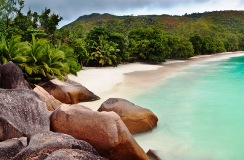
With Emirates Airlines increasing its daily flights to Seychelles, it's easier than ever to visit the archipelago in the Indian Ocean. Our readers recommend Anse Lazio on Praslin, Seychelles' second largest island, for an ideal beach getaway. Nestled in Chevalier Bay, Anze Lazio feels like a hidden oasis, thanks to the giant granite boulders that shelter its white sandy beach and bright turquoise sea. The shoreline remains largely untouched by buildings, aside from a few beach bars and restaurants located back amongst the palm trees, and a coral reef that keeps the waters calm also makes for an ideal snorkeling and swimming spot.

Sanur Beach (Bali)

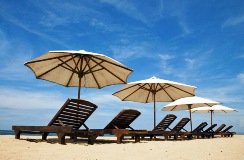
Sanur Beach, BaliBali is known as the Island of the Gods, and thanks to the film, Eat, Pray, Love, which highlighted the culture, travelers are starting to understand why. Sanur Beach is Bali's first developed tourism destination, and combines the amenities of a tourist locale with the culture of a traditional village. Here, you'll find an array of fine dining establishments, luxury hotels, and unique shops alongside ancient temples, art museums, and historic monuments. Plus, you'll want to enjoy the warmth of the ocean waves, which reach temperatures of nearly 90 degrees.

Hahei Beach(New Zealand)

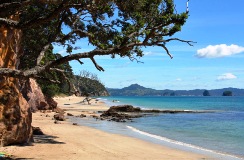
Hahei Beach, New ZealandAs a popular site for several epic films, with more on the horizon, New Zealand has proven to be a picture-perfect locale, often with its beaches as the main attraction. Our readers particularly like Hahei on the eastern side of the Coromandel Peninsula. The small settlement town serves as a gateway to the popular Whanganui-A-Hei (Cathedral Cove) Marine Reserve. Art galleries, accommodations, restaurants, and gift shops are available in the town center, but most visitors come to relax on the pink sands or dip their toes in the naturally occurring thermal springs at nearby Hot Water Beach. Visitors can even dig their own spa pool two hours on either side of low tide. If you want to do more than sit and watch the sunset, several water sports are available at Hahei, including scenic boat trips, sea kayaking, and snorkeling.

Ka 'anapali (Maui, Hawaii)


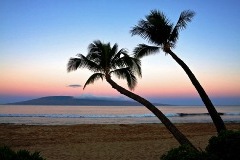
Ka 'anapali, Maui, HawaiiThough Hawaii is always a top spot for beaches, the recent revival of the popular show Hawaii Five-O has many people yearning for the Aloha State. Our readers recommend Ka 'anapali Beach as the best place to catch some waves and have some fun in the sun. Located on the tip of Maui, this planned resort town offers hotels and condominium rentals right on the three-mile stretch of beach. Visitors can spend the day sunbathing, snorkeling, surfing, or whale watching. Plus, if you need to step away from the sand, you'll find waterfront shopping, a sugarcane train, open-air restaurants, and championship golfing.

Cas Abao Beach (Curacao)

Cas Abao Beach, Curacao

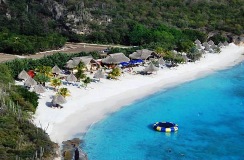
Chosen as one of our Destinations to Watch in 2011, Curacao's popularity is on the rise, and for good reason. Recently becoming its own country, the small island in the Caribbean is a hot spot for beach-goers, and our readers suggest Casa Abao Beach as the place to soak up the sun and swim in the sea. Located on the northwest coast of the island, Casa Abao offers crystal-clear waters perfect for an array of water sports, including snorkeling, diving, and kayaking. While on dry land, you can take advantage of the daiquiri bar, partake in a free salsa lesson, or even have a seaside massage.

Coronado Beach (San Diego, California)

Coronado Beach, San Diego
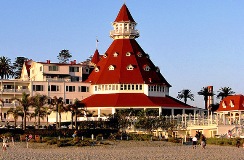
Recently receiving acclaim as one of Dr. Beach's top 10 beaches, Coronado Beach is far more than sand and surf. This luxurious escape in southeastern California is a favorite among our readers, and its Mediterranean-like climate offers a warm welcome for sunbathing, swimming, snorkeling, or fishing. Families can feel at ease here, as lifeguards patrol the beach regularly. Turn-of-the-century mansions provide a backdrop for the soft stretch of sand, which includes Coronado's most famous landmark, the Hotel del Coronado. For more than a century, this hotel has hosted many prestigious guests, and is now a prime spot for celebrity sightings. The hotel even offers beachside service, where you can enjoy a drink or a light snack on the sand.

Santa Marta (Colombia)


Santa Marta, Colombia
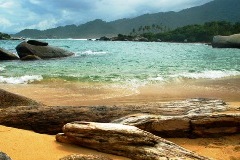
Though it has been out of the tourism spotlight for quite some time, Colombia is starting to take center stage in travel once again, with new hotels and airline routes that connect to several international destinations. Plus, Colombia offers plenty of prime spots for surf and sand, with more than 300 beaches running along the Caribbean Sea and the Pacific Ocean, including the serene beauty of Santa Marta. As Colombia's oldest city, Santa Marta is gaining popularity with locals and tourists alike for its lively and revamped beachfront, close proximity to Tayrona National Park, and a brand new marina that opened in May of 2010. The white sandy beaches, however, are a major draw, and many people come to swim in the calm waters.

Santa Rosa Beach (Florida)


Santa Rosa Beach, Florida
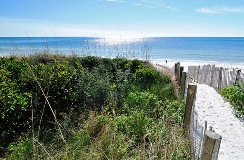
Although this entire gallery could be filled with Florida beaches, there is one in particular that caught our eye this year. Recently celebrating its centennial anniversary, Santa Rosa Beach, and its long stretch of untouched sand and calm seas offers a quiet escape on the Hogtown Bayou. Though the lapping waves and cool sand are the main attractions, there is plenty to do inland, such as shopping, fine dining, and golfing, and exploring the town's many art galleries and nature trails. As one of the 13 communities of South Walton, Santa Rosa Beach is now easily reached by flying into Panama City's new airport.

Playa Norte   (Isla Mujeres, Mexico)

Playa Norte, Isla Mujeres, MexicoJust a quick ferry ride from raucous Cancun, you'll find an oasis of peace and tranquility on Isla Mujeres, the Island of Women. Though the small dolphin-shaped island has several beaches, Playa Norta, known as the North Beach, is the most popular with our readers and tourists alike. Its turquoise waters and soft sand provide an ideal spot for a bit of fun in the sun, including activities like kayaking, snorkeling, or simply lounging under an umbrella. Plus, there are a few bars and restaurants that will deliver drinks and snacks right to your beach towel. If you're feeling more adventurous, you can explore one of the world's largest underwater sculpture parks at Cancun's new Underwater Museum, located near the island. Opened in November 2010, the brand new attraction includes more than 400 life-size figurative sculptures beneath the sea.

Monterrico  (Guatemala)

Monterrico, Guatemala
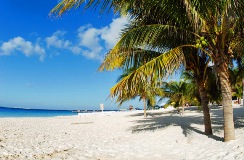
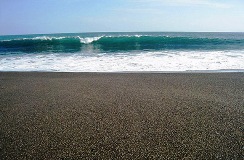
When it comes to something a bit different, our readers recommend the black volcanic sands of Monterrico, Guatemala. Located on the Pacific coast, Monterrico differs from the calm waters and soft sands of other popular vacation spots—its powerful waves are suitable for only the strongest swimmers. Aside from the challenging surf, most people come to see the endangered sea turtles that use the beach as a nesting ground. You might even catch a glimpse of the newly-hatched offspring during your visit. The small fishing village of Monterrico provides plenty of options for inexpensive accommodations and restaurants.

Share/Bookmark

Social mediaPlays Role In Egypt Some Expected In Iran

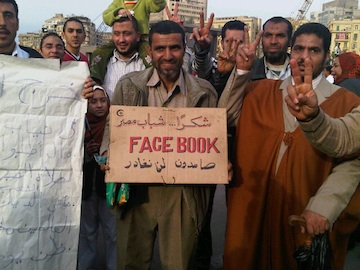
Facebook and the Egyptian revolution


As Egyptians celebrated in the streets of Cairo Friday, CNN's Wolf Blitzer posed a question to activist Wael Ghonim: "First Tunisia, now Egypt, what's next? "

Ghonim, a 30-year-old Google executive who became a symbol of the country's democratic uprising against Hosni Mubarak's authoritarian regime, replied with two words: "Ask Facebook."

"I want to meet [Facebook founder] Mark Zuckerberg one day and thank him, actually," Ghonim said.
Dictators are toppled by people, not by media platforms. But Egyptian activists, especially the young, clearly harnessed the power and potential of social media, leading to the mass mobilizations in Tahrir Square and throughout Egypt. The Mubarak regime recognized early on that social media could loosen its grip on power. The government began disrupting Facebook and Twitter as protesters hit the streets on Jan. 25 before shutting down the Internet two days later.

In addition to organizing, Egyptian activists used Facebook, YouTube, and Twitter to share information and videos. Many of these digital offerings made the rounds online but were later amplified by Al Jazeera and news outlets around the world. "This revolution started online," Ghonim told Blitzer. "This revolution started on Facebook."


Egypt facebook
 Egypt's uprising followed on the heels of Tunisia's. In each case, protestors employed social media to help oust an authoritarian government--a role some Western commentators expected Twitter to play in Iran during the election protests of 2009.
But there was no revolution in Iran, as President Ahmadinejad cracked down brutally on protesters. While "Twitter Revolution" might have made for snappy headlines, social media alone wasn't enought to topple a strongman. For a social media to work, it still needed a deliberate mobilization of activists on the ground.

So the "Twitter Revolution" talk proved premature and led to some backlash.
Evgeny Morozov writes in his new book, "The Net Delusion: The Dark Side of Internet Freedom," that only a small minority of Iranians were actually Twitter users. Presumably, many tweeting about revolution were doing so far from the streets of Tehran.

"Iran's Twitter Revolution revealed the intense Western longing for a world where information technology is the liberator rather than the oppressor," Morozov wrote, according to a recent Slate review. In his book, Morozov writes how authoritarian regimes can use the Internet and social media to oppress people rather than such platforms only working the other way around

The New Yorker's Malcolm Gladwell, in a much-talked-about piece in October, wrote how the "revolution will not be tweeted." 

It's true that tweeting alone--especially from safe environs in the West--will not cause a revolution in the Middle East. But as Egypt and Tunisia have proven, social media tools can play a significant role as as activists battle authoritarian regimes, particularly given the tight control dictators typically wield over the official media. Tomorrow's revolution, as Ghonim would likely attest, may be taking shape on Facebook today.

Share/Bookmark

Democracy Protests Bring Down Egypt's Mubarak


CAIRO – Fireworks burst over Tahrir Square and Egypt exploded with joy and tears of relief after pro-democracy protesters brought down President Hosni Mubarak with a momentous march on his palaces and state TV. Mubarak, who until the end seemed unable to grasp the depth of resentment over his three decades of authoritarian rule, finally resigned Friday and handed power to the military.

"The people ousted the regime," rang out chants from crowds of hundreds of thousands massed in Cairo's central Tahrir, or Liberation, Square and outside Mubarak's main palace several miles away in a northern district of the capital.

The crowds in Cairo, the Mediterranean city of Alexandria and other cities around the country erupted into a pandemonium of cheers and waving flags. They danced, hugged and raised their hands in prayer after Vice President Omar Suleiman made the announcement on national TV just after nightfall. Some fell to kiss the ground, and others chanted, "Goodbye, goodbye" and "put your heads up high, you're Egyptian."
"Finally we are free," said Safwan Abou Stat, a 60-year-old protester. "From now on anyone who is going to rule will know that these people are great."

 
The success of the biggest popular uprising ever seen in the Arab world had stunning implications for the region, the United States and the West, and Israel.

Egyptians celebrate the news of the resignation of President Hosni Mubarak, who handed control of the country to the military, at night in Tahrir SquaMubarak was the symbol of the implicit decades-old deal the United States made in the Middle East: Support for autocratic leaders in return for their guarantee of stability, a bulwark against Islamic militants and peace — or at least an effort at peace — with Israel.

The United States at times seemed overwhelmed throughout the 18 days of upheaval, fumbling to juggle its advocacy of democracy and the right to protest, its loyalty to longtime ally Mubarak and its fears Muslim fundamentalists could gain a foothold. Those issues will only grow in significance as Egypt takes the next steps towards what the protest movement hopes will be a true democracy — in which the Muslim Brotherhood will likely to be a significant political player.

Neighboring Israel watched with the crisis with unease, worried that their 1979 peace treaty could be in danger. It quickly demanded on Friday that post-Mubarak Egypt continue to adhere to it. Any break seems unlikely in the near term: The military leadership supports the treaty. While anti-Israeli feeling is strong among Egyptians and future ties may be strained, few call for outright abrogating a treaty that has kept peace after

From the oil-rich Gulf states in the east to Morocco in the west, regimes both pro- and anti-U.S. could not help but worry they could see a similar upheaval. Several of the region's authoritarian rulers have made pre-emptive gestures of democratic reform to avert their own protest movements.

The lesson many took: If it could happen in only three weeks in Egypt, where Mubarak's lock on power had appeared unshakable, it could happen anywhere. Only a month earlier, Tunisia's president was forced to step down in the face of protests.

Perhaps more surprising was the genesis of the force that overthrew Mubarak. The protests were started by a small core of secular, liberal youth activists organizing on the Internet who only a few months earlier struggled to gather more than 100 demonstrators at a time. But their work through Facebook and other social network sites over the past few years built a greater awareness and bitterness among Egyptians over issues like police abuse and corruption.

Egyptian youths wave a large Egyptian flag as ...

When the called the first major protest, on Jan. 25, they tapped into a public inspired by Tunisia's revolt and thousands turned out, beyond even the organizers' expectations. From there, protests swelled, drawing hundreds of thousands. The Muslim Brotherhood — Egypt's powerful Islamic fundamentalist movement — joined in. But far from U.S. fears the Brotherhood could co-opt the protests, the movement often seemed to co-opt the Brotherhood, forcing it to set aside its hard-line ideology at least for now to adhere to democratic demands.

Mubarak, a former air force commander came to power after the 1981 assassination of his predecessor Anwar Sadat by Islamic radicals. Throughout his rule, he showed a near obsession with stability, using rigged elections and a hated police force accused of widespread torture to ensure his control.

He resisted calls for reform even as public bitterness grew over corruption, deteriorating infrastructure and rampant poverty in a country where 40 percent live below or near the poverty line.
Up to the last hours, Mubarak sought to cling to power, handing some of his authorities to Suleiman while keeping his title.

Egypt Live Report

But an explosion of protests Friday rejecting the move appeared to have pushed the military into forcing him out completely. Hundreds of thousands marched throughout the day in cities across the country as soldiers stood by, besieging his palaces in Cairo and Alexandria and the state TV building. A governor of a southern province was forced to flee to safety in the face of protests there.

Mubarak himself flew to his isolated palace in the Red Sea resort of Sharm el-Sheikh, 250 miles from the turmoil in Cairo.
His fall came 32 years to the day after the collapse of the shah's government in Iran.
Vice President Suleiman — who appears to have lost his post as well in the military takeover — appeared grim as he delivered the short announcement.

"In these grave circumstances that the country is passing through, President Hosni Mubarak has decided to leave his position as president of the republic," he said. "He has mandated the Armed Forces Supreme Council to run the state. God is our protector and succor."

Nobel Peace laureate Mohammed ElBaradei, whose young supporters were among the organizers of the protest movement, told The Associated Press, "This is the greatest day of my life."
"The country has been liberated after decades of repression," he said adding that he expects a "beautiful" transition of power.


Opposition protesters celebrate Egypts President ...

The question now turned to what happens next after effectively a military coup, albeit one prompted by overwhelming popular pressure. Protesters on Friday had overtly pleaded for the army to oust Mubarak. The country is now ruled by the Armed Forces Supreme Council, the military's top body consisting of its highest ranking generals and headed by Defense Minister Field Marshal Hussein Tantawi.

After Mubarak's resignation, a military spokesman appeared on state TV and promised the army would not act as a substitute for a government based on the "legitimacy of the people."

He said the military was preparing the next steps needed "to acheive the ambitions of our great nation" and would announce them soon. He praised Mubarak for his contributions ot the country, then expressed the military's condolences for protesters killed in the unrest, standing at attention to give a salute.

Earlier in the day, the council vowed to guide the country to greater democracy. It said was committed "to shepherding the legitimate demands of the people and endeavoring to their implementation within a defined timetable until a peaceful transition to a democratic society aspired to by the people."

Abdel-Rahman Samir, one of the protest organizers, said the movement would now open negotiations with the military over democratic reforms but vowed protests would continue to ensure change is carried out.
"We still don't have any guarantees yet — if we end the whole situation now the it's like we haven't done anything," he said. "So we need to keep sitting in Tahrir until we get all our demands."

But, he added, "I feel fantastic. .... I feel like we have worked so hard, we planted a seed for a year and a half and now we are now finally sowing the fruits."

Egyptians celebrate in Tahrir Square after President ... Sally Toma, another of the organizers, said she did not expect the military would try to clear the square. "We still have to sit and talk. We have to hear the army first," she said. 
For the moment, concerns over the next step were overwhelmed by the wave of joy and disbelief.
Outside the Oruba presidential palace in northern Cairo, where tens of thousands had marched during the day, one man sprawled on the grass, saying he couldn't believe it. Protesters began to form a march toward Tahrir in a sea of Egyptian flags.

Thousands from across the capital of 18 million streamed into Tahrir, where protesters hugged, kissed and wept. Whole families took pictures of each other posing with Egyptian flags with their mobile phones as bridges over the Nile jammed with throngs more flowing into the square.

Abdul-Rahman Ayyash, an online activist born eight years after Mubarak came to office, said he would be celebrating all night, then remain in the square to ensure the military "won't steal the revolution."
"I'm 21 years old," he said. "This is the first time in my life I feel free."

Share/Bookmark

15 Secrets Your Waiter Will Never Tell You


What would two dozen servers from across the country tell you if 
 they could get away with it? Well, for starters, when to go out, what
 not to order, what really happens behind the kitchen’s swinging
 doors, and what they think of you and your tips. Here, from a group
 that clears a median $8.01 an hour in wages and tips, a few
 revelations that aren’t on any menu.

What you should know on Valentine's Day
1. Make reservations early. Restaurants usually don't have an abundance of tables for two. We need to time to plan where to put everyone. You'll get a better table and we'll be prepared.

2. Don't propose. It's so cliché. But if you do, warn us first. We'll put you in the corner. Nothing's worse than a crying woman in the center of the restaurant. Trust me.

3. Since Valentine's Day is on a Monday this year, go out on Friday or Saturday. Most restaurants will also serve their special Valentine's Day menu on those days. Or go out for brunch! Then you can sleep the rest of the day.
Waiters at Bernard's in Ridgefield, CT


What we lie about 4. We’re not allowed to tell our customers we don’t like a dish. So if you ask your server how something is and she says, “It’s one of our most popular dishes,” chances are she doesn’t like it.
—Waitress at a well-known pizza chain


5. If someone orders a frozen drink that’s annoying to make, I’ll say, “Oh, we’re out. Sorry!” when really I just don’t want to make it. But if you order water instead of another drink, suddenly we do have what you originally wanted because I don’t want to lose your drink on the bill.
—Waitress at a casual Mexican restaurant in Manhattan

What you don’t want to know
6. When I was at one bakery restaurant, they used to make this really yummy peach cobbler in a big tray. A lot of times, servers don’t have time to eat. So we all kept a fork in our aprons, and as we cruised through the kitchen, we’d stick our fork in the cobbler and take a bite. We’d use the same fork each time.
—Kathy Kniss

7. If you make a big fuss about sending your soup back because it’s not hot enough, we like to take your spoon and run it under really hot water, so when you put the hot spoon in your mouth, you’re going to get the impression — often the very painful impression — that your soup is indeed hot.
—Chris

8. We put sugar in our kids' meals so kids will like them more. Seriously. We even put extra sugar in the dough for the kids' pizzas.
-Waitress at a well-known pizza chain

What drives us crazy 9. Oh, you needed more water so badly, you had to snap or tap or whistle? I’ll be right back … in ten minutes.
—Charity Ohlund

10. The single greatest way to get your waiter to hate you? Ask for hot tea. For some reason, an industry that’s managed to streamline everything else hasn’t been able to streamline that. You've got to get a pot, boil the water, get the lemons, get the honey, bring a cup and spoon. It’s a lot of work for little reward.
-Christopher Fehlinger, maître d’ at a popular New York City restaurant

What we want you to know 11. Sometimes, if you’ve been especially nice to me, I’ll tell the bartender, “Give me a frozen margarita, and don’t put it in.” That totally gyps the company, but it helps me because you’ll give it back to me in tips, and the management won’t know the difference.
—Waitress at a casual Mexican restaurant in Manhattan

12. If you’re having a disagreement over dinner and all of a sudden other servers come by to refill your water or clear your plates, or you notice a server slowly refilling the salt and pepper shakers at the table next to yours, assume that we’re listening.
—Charity Ohlund


How to be a good customer
13. Use your waiter’s name. When I say, “Hi, my name is JR, and I’ll be taking care of you,” it’s great when you say, “Hi, JR. How are you doing tonight?” Then, the next time you go in, ask for that waiter. He may not remember you, but if you requested him, he’s going to give you really special service.
—JR, waiter at a fine-dining restaurant
14. Trust your waitress. Say something like “Hey, it’s our first time in. We want you to create an experience for us. Here’s our budget.” Your server will go crazy for you.
— Charity Ohlund

What you need to know about tipping 15. If you walk out with the slip you wrote the tip on and leave behind the blank one, the server gets nothing. It happens all the time, especially with people who’ve had a few bottles of wine.
—Judi Santana

Share/Bookmark

8 Essentials For Authentic Red Velvet Cake


A couple of weeks ago, my friend Nicole Taylor did a segment on real Southern red velvet cake on her foodie radio show, Hot Grease. Nicole is a Southern girl, born and raised in Georgia, and she has some pretty strong opinions about authentic red velvet cake. She searched for the real thing in New York City and came to the stunning conclusion that red velvet here is just wrong, wrong, wrong!

Well, if the culinary capital of the nation can't get it right, does anyone north of the Mason-Dixon get it right? And what's getting lost in translation? What exactly goes into the quintessential red velvet cake?
http://cdn-ugc.cafemom.com/gen/constrain/500/500/80/2010/11/09/11/bj/k4/po0o9lspkcxfv3.jpgAlthough red velvet cake has a mild chocolate flavor, it is not, by definition, a chocolate cake. Rather, it’s a devil's food cake that's made with cocoa, white vinegar, baking soda, and buttermilk.

The deep red color comes from red food dye, and the cake is traditionally iced in rich cream cheese frosting. Legend has it that the cake was actually born in the North, at New York City's Waldorf-Astoria Hotel. But there's no question that regardless of its origins, it has become a Southern specialty.

Some bakers out there seem to think all they need is red batter and white frosting to make red velvet cake. Not so, says Nicole, who has eight rules for the truly authentic red velvet cake:

1. The cake must have some cocoa, but not too much because it is not a chocolate cake.

2. The cake must have red food coloring; beet juice does not add the right kind of red.

3. The cake must have cream cheese frosting.

4. There should be pecans. (This was news to me.)

5. You must use high-quality ingredients, including White Lily flour, a Southern specialty flour.

6. Precise measurements and meticulous attention to detail are key for this cake; therefore, it must be made in small, easy-to handle, family-sized batches. (Mass-produced batter just doesn't cut it. Sorry, large-scale bakeries.)

7. You must use a hand-held electric mixer, not a stand mixer: Larger machines can over-mix the batter, which sometimes prevents the cake from rising properly.

8. Red velvet cake batter needs vegetable oil, not butter or shortening. Oil yields a very moist cake.
I've looked around for a recipe and was thrilled to discover this one, which incorporates all eight essentials for the perfect red velvet cake.


  • 2 1/2 cups all-purpose flour
  • 1 1/2 cups sugar
  • 1 teaspoon baking soda
  • 1 teaspoon salt
  • 1 teaspoon cocoa powder
  • 1 1/2 cups vegetable oil
  • 1 cup buttermilk, room temperature
  • 2 large eggs, room temperature
  • 2 tablespoons red food coloring
  • 1 teaspoon white distilled vinegar
  • 1 teaspoon vanilla extract
Preheat the oven to 350 degrees F. Line 2 (12-cup) muffin pans with cupcake papers. In a medium mixing bowl, sift together the flour, sugar, baking soda, salt, and cocoa powder. In a large bowl gently beat together the oil, buttermilk, eggs, food coloring, vinegar, and vanilla with a handheld electric mixer. Add the sifted dry ingredients to the wet and mix until smooth and thoroughly combined.

Divide the batter evenly among the cupcake tins about 2/3 filled. Bake in oven for about 20 to 22 minutes, turning the pans once, half way through. Test the cupcakes with a toothpick for doneness. Remove from oven and cool completely before frosting.
For the Cream Cheese Frosting
 
  • 1 pound cream cheese, softened
  • 2 sticks butter, softened
  • 1 teaspoon vanilla extract
  • 4 cups sifted confectioners' sugar
  • Chopped pecans and fresh raspberries or strawberries, for garnish
In a large mixing bowl, beat the cream cheese, butter and vanilla together until smooth. Add the sugar and on low speed, beat until incorporated. Increase the speed to high and mix until very light and fluffy.
Garnish with chopped pecans, fresh raspberry or strawberry, or sprinkles.


Share/Bookmark

Egypt's Mubarak In Red Sea Resort As Protests Rage


CAIRO – A local government official says President Hosni Mubarak is in the Red Sea resort of Sharm el-Sheikh, 250 miles from the capital Cairo, where protesters are deluging squares and marching on presidential palaces and the State TV building.

The official, who asked not to be identified because of the sensitivity of the issue, said Friday that Mubarak arrived at the airport in Sharm and was greeted by the local governor. Mubarak passed most of his powers to Vice President Omar Suleiman Thursday night, rebuffing the demands of hundreds of thousands of demonstrators that he step down immediately.

Mubarak spends a good deal of time in Sharm, where he has a palace.
THIS IS A BREAKING NEWS UPDATE. Check back soon for further information. AP's earlier story is below.

CAIRO (AP) — Egypt's powerful military backed President Hosni Mubarak's plan to stay in office until September elections, enraging hundreds of thousands of protesters who deluged squares in at least three major cities Friday, marched on presidential palaces and broke through army barricades at the state TV building — key symbols of the authoritarian regime.
Anti-government protesters, and Egyptian soldiers ... 
The army's show of solidarity with the president was a heavy blow to protesters who called on the military to take action to push Mubarak out after he announced Thursday night that he would hand most of his powers to Vice President Omar Suleiman but remain in office.

The Armed Forces Supreme Council, the military's highest body, depicted itself as the champion of reform in its latest statement. Trying to win the trust of an angry and skeptical population, the army promised to make sure Mubarak lifts hated emergency laws immediately once protests end. Mubarak and Suleiman had only given a vague timetable for ending the law — when security permits.
Still, the profound disappointment that Mubarak did not step down on Thursday turned to rage on Friday and protests escalated.


"What are you waiting for?" one protester yelled in the face of an army officer outside Mubarak's main palace, Oruba, in northern Cairo, where a crowd of demonstrators grew to more than 2,500. "Did you pledge your allegiance to the president or the people?" another shouted.
It was not known if Mubarak was in the palace, one of at least three in Cairo, or even in the capital. The palace was protected by four tanks and rolls of barbed wire, but soldiers did nothing to stop more people from joining the rally.

The march on the palace were the first by protesters who for nearly three weeks have centered their mass demonstrations in Cairo's downtown Tahrir Square.

More than 10,000 tore apart military barricades in front of the towering State Television and Radio building, a pro-Mubarak bastion that has aired constant commentary supporting him and dismissing the protests. They swarmed on the Nile River corniche at the foot of the building, beating drums and chanting, "Leave! Leave! Leave!" They blocked employees from entering, vowing to silence the broadcast.

Soldiers in tanks in front of the building did nothing to stop them, though state TV continued to air.
"The employees have been perpetuating lies and haven't been broadcasting the real message, feelings, and voice of the Egyptian people," said Mahmoud Ahmed, a 25-year-old graphic designer. "Nobody in Egypt feels like they know what is happening because state television is lying to them."

The protesters shouted, "We are here, where is Al-Jazeera." The pan-Arab news network has aired blanket coverage of the demonstrations, largely positive, and has been targeted by the government.
Other protesters massed outside the Cabinet and parliament buildings, both largely empty, several blocks from Tahrir.

Tahrir Square was packed shoulder-to-shoulder with a crowd that rivaled the quarter-million figure of the biggest protests, stunned by Mubarak's blunt determination not to bend in the face of the biggest mass uprising in Egypt's history, now in its 18th day.

Protesters chant anti-government slogans during ...


More than 100,000 massed in the main square in Egypt's second biggest city, Alexandria. In the afternoon, the giant crowd marched toward Ras el-Tin Palace, Mubarak's main residence in the city, with thousands more joining their ranks to fill a long stretch of the main seaside boulevard on the Mediterranean.

In Assiut, the main city of southern Egypt, about 40,000 protesters, including thousands who streamed in from nearby villages, marched down the main avenue, chanting for Mubarak to go. Thousands set base around the main security headquarters, guarded by riot police, and others headed toward the provincial government headquarters, guarded by the army. "You go along with your regime, Mubarak," the protesters shouted.
In the multiple demonstrations, protesters vowed they were more determined than ever and continued to try to win military support, chanting "the people and the army are one hand."

"Protesting and striking are fundamental rights and the most powerful available means to bring down the regime, so let's be steadfast and united. Right is above might we shall be victorious," Nobel Peace laureate Mohamed ElBaradei, whose supporters are among the youth activists organizing the protest movement, said in a Tweet on Friday.

In Cairo's Tahrir, a Muslim cleric urged the protesters never to give up in a sermon to tens of thousands of protesters seated in row after row sweeping across the sprawling plaza and over military vehicles.
"We lived long years where no one could speak a word ... Today we tell this regime to go," he said. "We will pray in this square this Friday and the Friday after and the Friday after and we will defend our dignity. 
The military statement, labeled "Communique No. 2" after a statement a day earlier, endorsed Mubarak's plan to transfer some powers to Omar Suleiman.
Egypt Live Report But it said it would make sure that Mubarak and Suleiman — both military men — stuck to their promises for reform. The armed forces, it said, "are committed to shepherding the legitimate demands of the people and to work for their implementation within a defined timetable until achieving a peaceful transition all through a democratic society."
After Mubarak promised to eventually lift the emergency law in place since 1981, the military command gave a more specific timetable, saying they would go once the protests end — "immediately after the end of the current circumstances."

More than 100,000 massed in the main square in Egypt's second biggest city, Alexandria. In the afternoon, the giant crowd marched toward Ras el-Tin Palace, Mubarak's main residence in the city, with thousands more joining their ranks to fill a long stretch of the main seaside boulevard on the Mediterranean.

In Assiut, the main city of southern Egypt, about 40,000 protesters, including thousands who streamed in from nearby villages, marched down the main avenue, chanting for Mubarak to go. Thousands set base around the main security headquarters, guarded by riot police, and others headed toward the provincial government headquarters, guarded by the army. "You go along with your regime, Mubarak," the protesters shouted.
In the multiple demonstrations, protesters vowed they were more determined than ever and continued to try to win military support, chanting "the people and the army are one hand."

"Protesting and striking are fundamental rights and the most powerful available means to bring down the regime, so let's be steadfast and united. Right is above might we shall be victorious," Nobel Peace laureate Mohamed ElBaradei, whose supporters are among the youth activists organizing the protest movement, said in a Tweet on Friday.
In Cairo's Tahrir, a Muslim cleric urged the protesters never to give up in a sermon to tens of thousands of protesters seated in row after row sweeping across the sprawling plaza and over military vehicles.
"We lived long years where no one could speak a word ... Today we tell this regime to go," he said. "We will pray in this square this Friday and the Friday after and the Friday after and we will defend our dignity.
The military statement, labeled "Communique No. 2" after a statement a day earlier, endorsed Mubarak's plan to transfer some powers to Omar Suleiman.

But it said it would make sure that Mubarak and Suleiman — both military men — stuck to their promises for reform. The armed forces, it said, "are committed to shepherding the legitimate demands of the people and to work for their implementation within a defined timetable until achieving a peaceful transition all through a democratic society."

After Mubarak promised to eventually lift the emergency law in place since 1981, the military command gave a more specific timetable, saying they would go once the protests end — "immediately after the end of the current circumstances."


Egypt Live Report


The law gives police and security forces almost unlimited powers of arrest, which opponents say they have used to crush dissent. Police are also accused of widespread use of torture.

The Supreme Council also called for public services to resume and urged "the return of normal life in order to safeguard the achievements of our glorious people."

Hopes that Mubarak would resign had been raised Thursday when the military council issued its Communique No. 1, announcing it had stepped in to secure the country, and a senior commander told protesters in Tahrir Square that all their demands would soon be met.
Instead, several hundred thousand people watched in disbelief and anger as Mubarak refused to step down in his televised address several hours later.


 Egyptian anti-government protesters march in ...Egyptians comment during Fridays protests


Share/Bookmark

10 States With the Deadliest Eating Habits

Americans are fat and getting fatter by the year. Recent data reported in medical journal Lancet showed that BMI (Body Mass Index), a recognized measurement of obesity, is higher on average in America than in any other nation.
The obesity problem, however, is international. The report in Lancet states that "In 2008, 9.8 percent of the world's male population were obese, as were 13.8 percent of women. In 1980, these rates were 4.8 percent and 7.9 percent." U.S. eating habits and diets have been exported, many experts say. Nations which before had relatively lean diets which were high in grains and fruits now consume many more soft drinks and hamburgers.


This trend toward poorer diets has caused obesity to be the most written-about health problem in the United States. Fat Americans are more likely to have diabetes, coronary artery disease, strokes and certain forms of cancer. Less well reported are links between obesity and dementia, obesity and postmenopausal estrogen receptors, and obesity and social status. Thin people, apparently, are more likely to be chief executives and billionaires. The problem of obesity is so acute that the number of studies about its causes and solutions grows by the day. The journal Health Affairs reported last year that overall obesity-related health spending reached $147 billion in the U.S., about double what it was a decade earlier.

Like so many other issues where data are collected in the public sector and the information is used to solve problems nationwide, the problems are local. 24/7 Wall St. looked at a number of factors which cause unhealthy diets and resulting obesity. These include income, access to healthy food sources, the ability to pay for healthy food, the concentration of fast food outlets, and the consumption of fruits, vegetables, sugar, fat and soft drinks. The levels of healthy eating defined with these parameters varies wildly from state-to-state.

That means there is not likely to be any one set of solutions created and funded at the federal level to solve the problem. Just as education results and their causes are hyper-local, so are the habits that cause unhealthy diets and their results. That makes the problem harder to solve. Congress cannot mandate how many McDonald's can be built within any hundred square mile area, or, if it could, McDonald's would object.

The data on poor eating habits and obesity are abundant and unusually well-researched. Congress funded a nationwide report which was called "Access to Affordable and Nutritious Food -- Measuring and Understanding Food Desserts and Their Consequences." The information contained in this report includes the number of households who do not have access to cars and probably find it difficult to go to grocery stores frequently. The USDA keeps in-depth statistics on concentration of grocery stores.

The Census Bureau tracks fast food expenditures per capita. The U.S. Department of Health and Human Services follows consumption of fruits and vegetables. 24/7 made its state rankings based on grocery stores per 1,000 residents, amount spent on fast food per capita, gallons of soft drinks purchased per capita and pounds of sweet snacks purchased per capita. We also took into account information provided about poverty levels, obesity and other factors directly related to unhealthy diets.

It is worth mentioning again how complex and local the obesity and eating habit problem is. This does not mean that the problems are insoluble, but nearly so. The issue of fat Americans is one that almost needs to be addressed house-to-house.


10. New Mexico
Grocery Stores Per 1,000 Residents: 0.26 (23rd)
Amount Spent on Fast Food Per Capita: $737 (8th most)
Gallons of Soft Drinks Purchased Per Capita: 58 (12th least)
Pounds of Sweet Snacks Purchased Per Capita: 111 (13th least)

 New Mexico's worst rankings occur in two metrics. It has the 44th-greatest percentage of households without a car that are more than 10 miles from a supermarket or grocery store and the 44th-greatest percentage of population that has low income and is more than 10 miles from a supermarket or grocery store, according to the United States Department of Ag1riculture. These metrics are significant because they suggest a lack of access to affordable and nutritious food. Residents may rely on fast food restaurants and convenience stores instead. New Mexico has the eighth-greatest amount of money spent on fast food per capita among all the states considered.


9. Arizona
Grocery Stores Per 1,000 Residents: 0.17 (47th)
Amount Spent on Fast Food Per Capita: $761 (4th most)
Gallons of Soft Drinks Purchased Per Capita: 60 (21st least)
Pounds of Sweet Snacks Purchased Per Capita: 109 (11th least)


Arizona has the second-fewest grocery stores per person, with only 0.17 for every 1,000 people. This illustrates a major restriction on healthy food access for one of the country's fastest growing states. One of the ways in which residents of Arizona are supplementing their diets is with fast food. Arizonans spent an average of $760.50 each on fast food in 2007, the fourth-greatest amount among the states.


8. Ohio
Grocery Stores Per 1,000 Residents: 0.18 (45th)
Amount Spent on Fast Food Per Capita: $622 (20th least)
Gallons of Soft Drinks Purchased Per Capita: 70 (11th most)
Pounds of Sweet Snacks Purchased Per Capita: 122 (10th most)


Because a large part of Ohio's poor population is located in major urban centers like Cleveland and Cincinnati, the state ranks well in regards to access to grocery stores among the poor. However, the state ranks third-worst in store availability across all income classes at 0.18 locations per 1,000 people, compared to 0.6 in first place North Dakota. Ohio's population has the 11th-greatest consumption of soft drinks, and top-10 highest consumption of both sweet snacks and solid fats. As a result of these poor diets, Ohio has an adult diabetes occurrence of over 10%, which is the 11th-worst rate in the country.


7. South Dakota
Grocery Stores Per 1,000 Residents: 0.5 (4th)
Amount Spent on Fast Food Per Capita: $547 (9th least)
Gallons of Soft Drinks Purchased Per Capita: 64 (23rd least)
Pounds of Sweet Snacks Purchased Per Capita: 122 (8th most)


South Dakota has the fifth-smallest population in the country, and yet, it is the 17th-largest state in terms of geographic area. As a result, many residents have limited access to affordable and nutritious food. In fact, South Dakota has the greatest percentage of households with no car and which are more than 10 miles from a supermarket or grocery store, as well as the greatest percentage of low-income households which are more than 10 miles from a supermarket or grocery store. Only 10.1% of adults in South Dakota consume the U.S. Department of Health and Human Services' recommended two or more fruits and three or more vegetables per day, compared to the national average of 14%. This is the fifth-worst rate in the nation.


6. Nevada
Grocery Stores Per 1,000 Residents: 0.23 (29th)
Amount Spent on Fast Food Per Capita: $939 (most)
Gallons of Soft Drinks Purchased Per Capita: 58 (10th least)
Pounds of Sweet Snacks Purchased Per Capita: 114 (19th least)


Nevada spends the most per capita on fast food -- nearly $940 per person per year. This is roughly 25% more than Texas, the second-worst state, and well more than twice what Vermont residents spend. As might be expected, the state ranks in the bottom 10 for both households with no cars and low-income populations, defined as people with income less than 200 percent of the federal poverty thresholds, and proximity to grocery stores. Nevada's obesity and diabetes rates, are above average.


5. Oklahoma
Grocery Stores Per 1,000 Residents: 0.25 (24th)
Amount Spent on Fast Food Per Capita: $676 (15th most)
Gallons of Soft Drinks Purchased Per Capita: 69.8 (8th most)
Pounds of Sweet Snacks Purchased Per Capita: 103.2 (3rd least)


The rate of household-level food insecurity, including households with food access problems as well as households that experience disruptions in their food intake patterns due to inadequate resources for food, is 15.2% in Oklahoma. The national rate is 13.5%. Oklahoma also has the third-lowest rate of adults who meet the recommended two fruit/three vegetable daily intake, with only 9.3% of adults doing so. Perhaps this is part of the reason Oklahoma's obesity rate is 31.4%, the fifth-worst in the country.


4. Kansas
Grocery Stores Per 1,000 Residents: 0.35 (7th)
Amount Spent on Fast Food Per Capita: $610 (19th least)
Gallons of Soft Drinks Purchased Per Capita: 64 (23rd most)
Pounds of Sweet Snacks Purchased Per Capita: 121 (12th most)


Kansas has some of the easiest access (seventh-best) to stores where cheap and healthy food is available. It is clear, however, that most residents do not take advantage of this, as the state has one of the worst diets in the country. Residents consume the 12th-most sweet snacks per person as well as the 12th-most solid fats -- more than 20 pounds per person. The state ranks 28th in adult diabetes and 31st in obesity -- 28% of the state's adults are considered overweight.


3. Missouri
Grocery Stores Per 1,000 Residents: 0.26 (22nd)
Amount Spent on Fast Food Per Capita: $623 (21st least)
Gallons of Soft Drinks Purchased Per Capita: 65 (18th highest)
Pounds of Sweet Snacks Purchased Per Capita: 121 (17th most)


Missouri does not rank especially poor in any of the metrics considered, however it does rank badly in about almost every one. It has the 11th-lowest rates of adults eating the recommended amount of fruits and vegetables, the eighth-greatest rate of food insecurity, and relatively high rates of soft drink, sweet snack and solid fats consumption. Missouri has the ninth-worst rate of obesity among adults, with 30% having a body mass index greater than 30.


2. Alabama
Grocery Stores Per 1,000 Residents: 0.21 (37th)
Amount Spent on Fast Food Per Capita: $649 (23rd most)
Gallons of Soft Drinks Purchased Per Capita: 77 (4th most)
Pounds of Sweet Snacks Purchased Per Capita: 113 (16th least)


Alabama residents consume 77 gallons of soft drinks per capita per year, the fourth-highest amount in the country. This is roughly 33% more than Oregon, which consumes the least. Soft drinks like cola have more sugar per ounce than nearly any other food we regularly consume, and it is clear that soda has helped contribute to Alabama's poor health outcomes. The state has the seventh-highest obesity rate and, predictably, the second-worst diabetes rate. More than 12% of the state's adult population has the disease.


 1. Mississippi
Grocery Stores Per 1,000 Residents: 0.21 (34th)
Amount Spent on Fast Food Per Capita: $588 (17th least)
Gallons of Soft Drinks Purchased Per Capita: 82 (most)
Pounds of Sweet Snacks Purchased Per Capita: 113 (17th least)


Mississippi has the worst eating habits in the country. Only 8.8% of the adult population eats the recommended amount of daily fruits and vegetables, the lowest rate in the country. Residents consumed just under 82 gallons of soft drinks per capita in 2006, the greatest amount reported. Furthermore, the state has the third-highest rate of household-level food insecurity, with 17.1% of households being affected. It is perhaps unsurprising, then, that the state has the highest rates of both adult diabetes (12.8%) and adult obesity (34.4%).

Share/Bookmark