Saturday, February 26, 2011

How to Handle Sticky Interview Situations

Think back to the 2007 Miss Teen USA pageant when Caitlin Upton, representing South Carolina, was asked why so many Americans were unable to locate the United States on a map. Her response was muddled, to put it kindly. Her incoherent response not only left the judges scratching their heads but also proved that answering a question on the spot can cause anyone to stumble.

Although that video clip went viral and millions of viewers have had fun laughing at Upton's botched answer, you can probably assume everyone identified with her to a degree. Who hasn't been called on in class or been asked a question in a meeting and just blathered on like a toddler?
Imagine feeling this helpless during a job interview.
You're already tense enough without worrying that you won't even be able to piece together a proper sentence. Yet, many job seekers have found themselves caught in a situation where the right answer just isn't coming to them. Even if they're not  tongue-tied, they don't know how to answer an interviewer's peculiar or possibly illegal question.

Caught off-guard, anyone can freeze during a job interview. How should you avoid being the next Miss South Carolina in your job hunt?

Be creative and still professional

Sometimes hiring managers ask questions they know will catch you  off-guard. The purpose of the question isn't so much about what you answer as it is how you handle the pressure. For example, if you're asked how many gallons of paint are necessary for you to paint the moon, don't worry about getting the math right. The hiring manager probably doesn't know the answer either. Fun or quirky questions are supposed to knock you out of your comfort zone so that the employer can observe you.

Career expert and author J.P. Hansen stresses individuality balanced with professionalism.
"When asked a fun question, such as, 'What color would you be?' your answer should be fun, creative, entertaining and showcase your personality," Hansen says. "With that in mind, never forget to remain professional and polished. Just because you are in a fun moment in an interview does not mean this is your time to become best friends with the interviewer or slack in professionalism. Remember, you are still in an interview."

Don't panic

When you're in an interview, dozens of thoughts run through your mind. You say to yourself: "Maintain good posture and make eye contact"; "Don't say 'um' too much"; "Don't yawn"; "Speak slowly"; "How did the handshake go -- too forceful or too weak?" You're so busy analyzing the situation and trying to appear calm that you don't pay enough attention to the question at hand. Suddenly the hiring manager is waiting for you to talk and you're not sure what to say to a question you know you could answer any other day of the week.

"It's common to blank out during an interview but fatal to answer, 'I don't know,'" Hansen explains. "If you draw a blank or don't understand the question, simply ask a qualifier. For example, 'I'm not sure I understand the question.' It buys you time and puts the ball back in the interviewer's court."

Even if the interviewer doesn't clarify the question as much as you'd like, you still get a few extra moments to piece together a coherent response. And remember, coherence means a lot in an interview.
"[The] interviewer's pet peeve?" Hansen asks. "A rambling response that doesn't answer the question."

Decide how personal you're willing to go

Sometimes hiring managers cross a line with their questions and you're not sure how to respond. Although on occasion you'll run into an unpleasant employer for whom you'd never want to work, most interviewers are good people trying to find good workers. And like any human they make mistakes, such as asking questions that are illegal or at the very least make you uncomfortable.

Granted, if this person is being paid to interview people, he should know better, but everyone make mistakes. Also, his mistake doesn't mean you should feel forced to answer any question he asks if you're not comfortable. Hansen recommends that job seekers find their own limits if, for example, the interviewer asks about their health.

"If you want the job, answer in an upbeat, confident manner. Try, 'I exercise, eat right and, according to the results of my last check-up, my health is excellent,'" he suggests. "You always have a choice not to answer a question, but know that you'll likely disqualify your candidacy. The best advice: Answer all questions, get the offer and then decide."
When confronted with one of these questions, step back and think about what it means to you. Is the interviewer prying into your life or trying to get at a deeper issue, or did the question come out wrong even though it's obvious no ill intent was meant? Trust your instincts and keep the answers in your comfort zone. As with any sticky interview situation, you want to remain calm and in control at all times.

Share/Bookmark

'You Said That in an Interview?'

Just because you got an interview doesn't mean you'll know all the right things to say once you're in the interview chair.  Most people have few stumbles before winning that job. When it comes to interviews, practice and experience make perfect, career experts say.

Here, interviewers and human resources experts share the things job seekers say that leave them scratching their heads:

"There are plenty of common interview questions, and when an interviewer asks one of the basics, it is expected that the applicant will have a well-rehearsed response. For example, 'Why would you like to work here?' is a standard interview question, so one would expect interviewees would have a well-prepared response. I have heard people respond with all kinds of inappropriate reasons: 'Because I live down the street,' 'Because I am out of work,' 'Because you offer benefits' ... None of these are responses that will impress an interviewer." -- Chris Posti, president of outplacement firm Posti &  Associates Inc.

"The thing that always makes me scratch my head during an interview is when I ask, 'What questions do you have for me' and they've got nothing or ask something lame like, 'What's it like to work here?' In the age of Google, doing enough research on the company to have some interesting questions ready for the interviewer is basically the price of admission." -- Scott Eblin, executive coach and author of "The Next Level: What Insiders Know About Executive Success"

"I like to ask interviewees to describe their work style. This question is intended to get at self-awareness and how the candidate may or may not fit into the company or work group. One interviewee's response stands out. He said, 'Well, Matt, I am actually an extroverted introvert.' Upon further probing, he said, 'I force myself to be a people person.' Between the contradictory remarks and clichés, I certainly was scratching my head after that question." -- Matthew Levy, president of Corner Office Career Coaching

"I was interviewing a woman for a position in our department. Right away she noticed I was wearing an engagement ring and proceeded to ask me questions about my upcoming wedding. She mentioned she was also recently married and spent five minutes offering me advice about the process, which I never asked for. Needless to say, she steered the conversation away from the real reason she was there, which was unprofessional and did nothing to show off her work experience. Talking to me about my personal life was a clear signal that she'd be off-task in the future." -- Karina P., account executive at financial services firm.

"I was a marketing director at a multinational IT company, and it seemed that everyone wanted to be in marketing because it was the place to be: filled with energetic people having a lot of fun. When we advertised for positions, many internal staff applied. I never knew if they really loved the marketing profession, or if they just wanted to escape their boring job. So one day an engineer insisted that he wanted to switch careers. Why would an engineer take a shine to marketing? It was a huge career change. He would have been great on the team, but I wanted to test his conviction.

So I asked, 'Doesn't it bother you to take a $20,000 pay cut?' With that, he stood up, swore at me and stormed out of the room. In fact, he would have earned $40,000 more in my department, but I wanted to check if he really meant all that fluff about 'loving marketing.' I was concerned that he just wanted an easy ride into a fun department, all for the wrong reasons. I set a trap, and he exposed his true colors. He stormed out of a $40,000 pay rise. The lesson is, beware the trick question. You never know how you are being set up." --

Share/Bookmark

11 Warning Signs Your Interview Is in Trouble

During driver's education courses, you learn what each road sign signifies. The two arrows converging means you need to merge. A squiggly arrow means the road winds. "Left Lane Ends" means, well, the left lane ends.
Sometimes you don't even need the signs to know what to expect. If you see a flurry of red brake lights, you know traffic is not moving. In an ice storm, if the car in front of you is skidding from side to side, you can bet that the road is slippery.

Job hunts come with their own warning signs, but they're not typically as blunt as the bright yellow and orange signs posted on the side of the road. Instead, you're more likely to get context clues, like the brake lights. The interview process is full of uncertainty for a job seeker, and much of the power is in the interviewer's hands. Sometimes you don't know if the interview is going well. Other times you're so nervous you don't recognize the signs that this company isn't right for you.

Therefore it behooves you to recognize the warning signs that your job interview is in trouble. Here are 11 warning signs to watch for when interviewing for a job:

1. You're pretty sure you know how to get to the interview site, but you're not positive.

Before you can even look for warning signs of a bad interview, you need to get there first. Lisa Fedrizzi-Hutchins is  a human resources/compliance administrator who was heading to a job interview earlier this year. She trusted her GPS unit, but realized the directions were incorrect once she was en route. Fortunately she called the company and asked some clarifying questions so that she could arrive at the interview on time.

2. You're talking more than the interviewer is.

Job seekers shouldn't dominate more than 40 percent of the conversation, says John M. McKee, founder and CEO of Business Success.
"Because many job seekers are anxious to show that they are the best candidate for a job, they often dominate the conversation with things like never-ending answers or run-on sentences," he explains. "The interview time may end before they've had adequate time to deal with all the questions the interviewer had prepared."

3. The interviewer's eyes are on the clock, not you.

As a managing partner at Winter, Wyman and Co., Mark Gleckman knows the importance of an interviewer's body language.
"During an interview, be an active observer," Gleckman advises. "Watch your interviewer's body language -- is she glancing at her watch or noticing who is walking by? These could be signs that the interview may not progress to the next phase." He suggests asking the interviewer if you've provided all of the information she was hoping for or if you can offer anything else to get the most out of the interview.

4. The interviewer decides to take a phone call mid-interview.

An interviewer should treat you with the same respect he or she expects. Jennifer Mounce, executive coach and interview adviser for Coach Effect, has heard her share of bad interview stories. One manager stopped an interview to take a 20-minute phone call without warning the interviewee, who was told to stay in the room until it was over. When the call was over, the interviewer resumed with the questions, but his mind was obviously elsewhere.
"Candidates must ask themselves if they want to work for a person who can't give them their full attention for a short period of time or who doesn't have the communication and/or social skills necessary to put the candidate at ease, apologize or explain the necessity of the disruption," Mounce says.

5. The interview feels like a test of endurance.

Mounce also warns of employers who hold marathon interviews that last seven hours. Applicants are not asked if they'd like a restroom break, snack or glass of water. Mounce advises you to think about what the job would be like if the interview is this bad.

6. No one wants to work here.

An insightful question that many job seekers fail to ask is why the position is available. Or, to frame it so that you sound focused on your future with the company, ask where the employee formerly in the position is today. JR Rodrigues, co-founder of JRBM Software, cautions job seekers to watch for companies with a revolving door.

"[If] the hiring manager complains to the interviewee about having had his last three hires quit after only a short term of employment, you should wonder about what is causing such turnover and whether this job is for you," he says.

7. You're participating in a questionnaire, not an interview.


Kris Alban, director of strategic partnerships for iGrad, keeps a list of questions in front of him when conducting an interview.
"During a good interview, I will go off-page as certain responses provoke additional questions or I may ask the interviewee to expand on something they said," Alban says. "If you notice your interviewer just running down their list of questions, then you know that you need to engage them more. I definitely become more engaged when the interviewee accompanies their answer with a story that anchors it."

8. You get snippy with the administrative assistant.

The interview begins the moment you are on the premises, so don't save your best behavior for the meeting room. Monique A. Honaman, CEO of ISHR Group and a former HR manager, stresses the importance of good manners.
"I can't tell you how many times I have heard of job seekers being dismissive to certain individuals, and I know hiring managers often ask the receptionist to provide input on the candidates as well as those more heavily involved in the job interview process," Honaman says. "It's not just about having the skills and abilities to do the job; the personality and respect elements are  critical, too."

9. You spend 10 minutes complaining about your last boss.

Honaman also cautions against going negative during an interview. "Job seekers must never talk negatively about a former co-worker or former boss, even if it seems like this negativity is being encouraged," she warns. "Take the high road. It's an incredibly small world out there and it's amazing who knows who."

10. The company is in financial trouble.

"[If] there is a loud argument in the office of the company you are interviewing at stemming from a creditor who has not received payment for his product or services that were purchased by the company, you need to consider whether this company will be able to pay you," Rodrigues says.

11. The employer doesn't keep his or her word.

Rodrigues also warns against employers who tell you one thing but do otherwise. Blatant lies are obvious warning signs, but other subtle ones also hint at trouble. If you were given a timetable during the interview but you haven't heard anything since, Rodrigues says you might have fallen off of the interviewer's radar and need to work your way back into his or her view.

Share/Bookmark

9 Interview Questions You Should Be Asking

When interviewing, many candidates don't realize that the questions they ask are just as important as how they present themselves and the answers they give. Failing to ask questions shows a lack of genuine interest in the job. Asking foolish questions indicates the candidate didn't do enough research before the interview. Making either mistake can cost a candidate the job offer.

Heather Krasna, author of "Jobs That Matter: Find a Stable, Fulfilling Career in Public Service," advises job seekers to prepare a list of questions before the interview, much as they'd create a list of talking points that address the value they offer the employer.

"Every interview is different. Some interviewers will only give you the chance to ask two or three questions. Others will ask again and again if you have any questions, so prepare more questions than you think you will need in case this happens," she says.

Developing a list of questions to ask is problematic for many job seekers. In her book, Krasna offers the following suggestions and explains why such questions can give candidates a much-needed edge:

1. "What are you seeking in the ideal candidate for this position?"

This question allows you to counter by adding any particular skills or qualities that you have left out in the interview, but that the employer thinks are important.

2. "How would you describe your management style?"

When you are being interviewed by a hiring manager to whom you would report, this is a great question for gathering insight into whether you might get along.

3. "Can you give me some examples of the types of projects I may be working on?"

If the job description was a bit vague on the types of assignments you would be doing or if you are otherwise unclear on this point, this question is essential.

4. "What do you like best about working for this organization?"

This question not only gives great insight into the culture of the organization, it also makes the person answering the question feel good. In addition, if the person answering can't come up with something good to say, this is a red flag about the place where you might be  working.

5. "How did this position become available?"

This question is a bit pushy, but it is important if you do not know how the position opened. Is the organization expanding? Or did the last person leave, and can you subtly find out why?

6. "What would you like to see happen six to 12 months after you hire a new person for this position?"

This question is akin to "How will I be evaluated?" or "How do you measure success in this role?" It can also clue you in on whether the expectations for the job are realistic.

7. "What resources are available for this position?"

This question addresses the technology, staff or budget resources you will have and gives many insights into whether the organization is being realistic about what you can accomplish given the resources available.

8. "Is there anything you are still wondering about my candidacy that might keep you from offering me the position? Is there anything further I should clarify?"

This question shows you are open to feedback or critique and also tells the employer you want every opportunity to reassure him or her that you would be a great employee.

9. "What is the next step in the process? May I have your business card?"

The final question can help relieve your anxiety after the interview because you at least have some clue about how long it will be before the employer gets back to you. Ask for business cards from each person interviewing you so you can send thank-you notes.

Krasna adds that there are also questions candidates should steer clear of asking during the interview, including inquiries about salary, scandals and office politics, and personal questions about the interviewer.
*Excerpted from "Jobs That Matter: Find a Stable, Fulfilling Career in Public Service" by Heather Krasna.

Share/Bookmark

5 Ways to Shine in Your Next Interview

In a tough job market, landing an interview is a major accomplishment. When such opportunity knocks, be ready to show why you're the candidate to hire. Here are five tips that can help job seekers make a great impression.

1- Do your homework

Erika Milonas, director of campus recruitment for The McTigue Financial Group (part of Northwestern Mutual) in Chicago, reviews more than 1,000 résumés a year and interviews about 400 candidates to choose 40 for the company's internship program. With such competition, it would seem that interviewees would be incredibly prepared, but that isn't always the case.

Milonas finds some candidates unable to answer the simple question, "What do you know about The McTigue Financial Group and Northwestern Mutual?" She calls failure to be able to discuss the company at this basic level a "deal breaker," regardless of how the rest of the interview went.
Since most businesses have websites, learning about a potential employer is relatively easy. Find out what the company does and its main  products and services, and be familiar with recent developments in the industry.

2- Know yourself

Once you know something about the employer, it's time to think about why you would be a good match. Since it is often difficult to formulate answers on the spot, practice responses at home.
"Before your interview, write out answers to potential questions you are likely to be asked," says Robin Ryan, author of "60 Seconds & You're Hired!" "Keep your answers concise, no more than 60 seconds."
While question will differ by employer, Ryan recommends thinking out responses to these standards:

  •  Why did you leave your last job (or why do you want to leave)?
  •  What is your greatest weakness?
  • What is the salary you are looking for?
  • Describe the worst boss you've ever worked for.


3- Engage in, but don't take over, the interview

Employers want workers who bring positive energy to the workplace. Two common pitfalls Milonas sees among candidates are that they lack interest in the opportunity and answer questions with a simple "yes" or "no" rather than engaging in meaningful conversation.

On the flip side, Linda Matias, president of CareerStrides and author of "201 Knockout Answers to Tough Interview Questions: The Ultimate Guide to Handling the New Competency-Based Interview Style," cautions against overwhelming the interviewer.

"Though it is true that job seekers should be active participants in the interview process, they should not take over the interview," Matias says. "Usually, job seekers take over when nerves get the best of them or when they feel they have to fill in the silence. It's a delicate balance, but job seekers need to learn when to ask questions and when to allow the interviewer to take charge."
Once again, practicing beforehand can make the difference.

4- Look the part

"In the first 10 seconds of meeting a candidate, the interviewer makes a mental decision on whether you look right for the job," Ryan says. "If your personal presentation is inappropriate, you've lost that position without saying a word."
Some fields accept greater creativity in apparel, but experts generally agree to err on the conservative side.
"This is not the time to be a fashionista," Milonas says. For men, this translates to a business suit or blazer, shirt and tie. Women should consider a suit (either a jacket and skirt or a matching pantsuit).
"Neatness counts, too," Ryan says. "Shine your shoes. Clothes should be cleaned, pressed and fit well."

5- Remember your manners

Finally, make sure your conduct fits the part. Punctuality shows respect for other people's time. Use of polite terminology should be standard during an interview, but it also reflects well to be equally courteous when addressing receptionists and other office workers.

A big etiquette faux pas is not sending a thank-you letter immediately after an interview. "Too many job seekers have an 'if the manager is interested, she or he will call' mentality and wait by the phone," Matias says. "After a few weeks of the phone not ringing, that's when they decide to follow up. By then it may be too late. Or, if it's not too late, chances are that the job seeker is desperate. That anxiety may come through and turn off the interviewer. To avoid tripping up, job seekers should follow up quickly, not only because they want the job but because it's the polite action to take after they've been invited for an interview."

While e-mail makes sending a rapid thank-you note easy to do, consider going the extra mile by composing a handwritten message sent via snail mail. After all, you're not out simply to be another candidate, you want to shine.


Share/Bookmark

Two Myths About Resumes

Over eight years as a career coach in New York City, Win Sheffield has observed the myths his clients tell themselves about the challenge of finding a job.

In this piece, he lays out some facts and some fictions about résumés. (I've edited his words a bit.) He writes:


Résumé myth No. 1: Putting together my résumé is the most important part of my job search.
The thinking behind this:

Every ad requires a résumé. Everyone who wants to assist me says that they can forward my résumé to HR. To get a job I need to interview and before an interview, interviewers ask me to send my résumé. The only way people will know who I am professionally is by my résumé. It is therefore the most important part of my search.

The appeal -- why we want to believe it:

If the résumé is the key to job search, then once I have completed it (as hard as it is to do), I am done. A résumé is concrete and readily definable. It reflects facts. I love a clearly defined goal. It removes the uncertainty from the impossible business of job search.

The real deal:

A résumé is worth spending time on. Most employers require a résumé to get a job. I have clients who come to me after years of success getting jobs without one, but for the vast majority of people, a résumé is essential.
As important as it is, a résumé is just a piece of paper; as such, we cannot expect it to make the impression we do in person. Even with careful attention, as a rule, a résumé reflects where we have been, not where we are going; it is most helpful when we want to continue in the same field. But increasingly, we are changing fields.

To the extent that we change direction, we cannot rely as much on our résumé. Careful rewording of the résumé accompanied by a persuasive cover letter can help, but ultimately, the résumé is no substitute for meeting in person, so it pays to find ways to remove it from its role as our sole representative.

Unintended consequences:

Job seekers routinely spend lots of time on their résumés, get stuck there and don't move forward with their search. Others produce a résumé that does not effectively reflect their capabilities and therefore slows down their search.

What this means for you:

Spend time on your résumé. If you are changing fields, make sure it is comprehensible to your intended audience. Make it "good enough" and then get on with your search. Look into the variety of other ways at your disposal to connect with people through friends, colleagues, acquaintances, professional organizations, social and alumni groups, etc. Those people may ask for a résumé, but it will not be their only impression of you.

Résumé myth No. 2: The best way to let people know you are in the market is to ask for a job and send out résumés

The thinking behind this:

If I don't know about where there are jobs, other people may, so why not ask them? My friends and business colleagues are often more than happy to send my résumé to someone they know if they don't have a job for me.

The appeal -- why we want to believe it: 

It is tempting, especially when we are in our I-am-out-of-a-job-and-not-worth-your-time mode, to think that we are bothering our contacts. As a result, we decide to take as little of their time as possible. It's easy and just takes a minute to send out résumé, so we feel comfortable asking contacts to do that.

I also do not want to be manipulative or deceitful when I talk to my contacts. Everyone knows that networking is the way to get a job and when people say they are "networking," what they really mean is that they are looking for a job.

The real deal:

It is highly unlikely that anyone will know about the right job for us at the time we ask. It is also not likely that they will know someone who can offer us the ideal job. It could be that sometime in the future they may have a job, but the odds are still low. A dialog with a binary response (do you know of a job for me or don't you know of a job for me) is a limiting conversation.

Unintended Consequences:

This leads us to ask everyone we know for jobs. If this goes on for awhile, our friends and contacts may well feel badly that they cannot give us what we want. They may also feel used, because we only come to them when we want something. In either case, they may start to avoid us, regard us as "damaged goods." or both.

What this means for you:.

The problem is not that you are approaching people, but why you are approaching them.
Those who like you want to be of assistance. They may think, like many people, that the best way to get a job is to get your résumé out there. They forward résumés to HR because they don't have a job for you and that is how they think they can best help you. Also, if they really don't want to help or don't know how to help, they can save face by sending your résumé to HR; then they don't have to think about it anymore.

They could help in other ways if you asked them. Would you be interested to know how things work inside their companies? Do you need to know something about how they do business? Who are their competitors? Is there a strategy you have used that you want to share with them or ask them about?

People like answering questions to which they know the answers. These questions also present an opportunity for them to interact with you, to learn in more detail about what interests you and to get to know you better. When it gets down to it, the better they know you, the more they will want to support you -- and refer you to jobs they do know about.


Share/Bookmark

9 Ways to Build Wealth in 2011

• A significant upfront sum. "You shouldn't have to invest more than you're comfortable with," he says.


Want to build some wealth in 2011? Revisit those New Year's resolutions.
You probably haven't thought about your pledges in more than a month. But odds are at least one of them involves getting rid of debt, increasing your income or building some financial security.
   http://captureinfo.blogspot.com
To help you out, nine experts in the fields of money, debt, real estate and consumer affairs have shared their best wealth-building tips for 2011.

1. Funnel That FICA Cut Into a Retirement Windfall

David Bendix, CPA/PFS, CFP, president of The Bendix Financial Group:
Take the money you won't pay in FICA, or Federal Insurance Contributions Act, taxes this year and redirect it to your 401(k). "It's a great concept that you're taking that 2 percent and using it to fund your retirement," he says. "It's one great technique for the coming year."


Tip for success: For the maximum impact, talk with human resources ASAP and change your deductions, Bendix says. One hopes the habit of saving a little more will stick with you through next year, too, he says.

2. Look For Low-Cost Mutual Funds and Watch Those Fees

Jill Gianola, CFP, owner of Gianola Financial Planning, LLC, and author of "The Young Couple's Guide to Growing Rich Together":
"One of my favorite ways to build wealth is to pay close attention to the cost of investing and stick to low-cost, no-load mutual funds," she says.

One example: "If you invested $10,000 in small-cap, value funds with a commission and higher-than-average operating expenses and earned 7 percent a year for 10 years, your balance would be $16,005 and you would have paid a sales charge of $575 and $1,890 in operating expenses," she says.

"Compare that to investing the same amount for the same time period earning the same return in a no-load, small-cap, value fund with low operating expenses," she says. "Your balance would be $19,128 and you would have paid $408 in operating expenses." The difference: $3,123.
Tip for success: Calculate cost and differences with Bankrate's mutual fund fees calculator.

3. No Shortcuts: Year After Year of Consistent Savings 

Ric Edelman, chairman and CEO of Edelman Financial Services LLC, and author of "The Truth About Money":
"The best way to build wealth remains unchanged: Invest as much money as you can (which is usually more than you think you can) into a diversified set of low-cost mutual funds and exchange-traded funds -- and keep doing this for many years, no matter what."

4. Get Rid of High-Interest Card Debt

David Jones, president of the Association of Independent Consumer Credit Counseling Agencies:
"For most people, building wealth is not about what to do with excess disposable income," he says, but "how to keep more of the money that they earn."

"The best way to do that: Reduce the amount of money spent on interest payments -- especially high-interest payments attached to credit card purchases," Jones says. "If a consumer can work to pay off just one high-interest credit card and not overcharge it again, then the money saved after it is paid off can go to a building-wealth plan. This may not be easy, and it may take time, but it's a realistic goal for just about every consumer."

Tip for success: Find a certified credit counselor to help you draft your own personal spending plan for free. To find one, visit either the AICCCA or the National Foundation for Credit Counseling.
"If the consumer sticks to that plan, it will be their best chance to begin a systematic process for building wealth," Jones says. "It may be modest at first, but with diligence, everyone can have a chance to improve their financial circumstances."

5. Buy a Home 
 Ron Phipps, president of the National Association of Realtors and principal broker for Phipps Realty in Warwick, R.I.:
Want to build wealth in 2011? Buy a home, Phipps says. Mortgage rates are low, selection is great, prices are about one-third lower than five years ago, "and, by the way, you can live in the investment," he says.
Homeownership remains a long-term vehicle to financial independence and wealth, Phipps says.
Tip for success: Even though it sounds "pretty elementary," it's especially vital to "use common sense when buying and selling," Phipps says. "Price at the market to sell. Buy what you need and can afford."

6. Balanced, Diversified Portfolio Plus Education

Karen Altfest, CFP, principal adviser and executive vice president of client relations at Altfest Personal Wealth Management, a fee-only financial planning firm based in New York:
"Have a balanced portfolio," Altfest says. "So many people think that as they get older, money will come from interest. The secret is (keeping) a well-balanced, diversified portfolio and learning what it all means."

Too many times, people take the "set it and forget it" approach with their retirement accounts, she says. But you shouldn't "let it get cobwebs because you can't deal with it," Altfest says. "Get help." Your goal for the year: Get educated about what's in your retirement accounts and why.

Tip for success: You don't solely want only fixed-rate instruments such as bonds and CDs, she says, because it takes more than compounding interest to build a retirement fund.

7. If You Have an HSA, Max It Out

Eric Tyson, author of "Investing for Dummies" and "Personal Finance for Dummies":
"I'm a very big fan of (health savings accounts) because they offer better potential tax benefits than a traditional retirement fund," Tyson says. With HSAs, investors receive an upfront tax break, compounding investment earning, and pay no tax on the money that is withdrawn "as long as its use is for health expenses," he says.

But the device might not work for everyone. "Obviously, you have to have a high-deductible health plan," he says.
Before 65, if you pull money from your HSA for nonhealth expenses, you'll pay income tax and a 20 percent penalty on the withdrawal. After 65 (or in cases of death or disability), such withdrawals are taxed as income -- without the 20 percent penalty.

The maximum you can put into an HSA in 2011 is $3,050 for an individual account (plus an extra $1,000 if you're 55 or older), and $6,150 for a family account, he says.

8. Do Your Due Diligence                                              

John Breyault, director of the National Consumer League's Fraud Center:
To build wealth that you can rely on, vet the adviser and the investment thoroughly, Breyault recommends. Some red flags:
• Guaranteed returns. "There's no such thing as a guaranteed return," he says.

• Pressure. "If it's a good investment opportunity today, it will be a good investment opportunity tomorrow."
• Nothing in writing or a reluctance to share information you could present to a third-party. "If it's a significant sum of money, I wouldn't hesitate to run it by an attorney," Breyault says.
Also, "you should be able to get your money out easily," Breyault says.

Tip for success: Run investments and their representatives past state protection agencies such as the office of consumer protection and the state attorney general's office, he says. Also check with business sources such as the Chamber of Commerce and the Better Business Bureau.

Check with regulating authorities such as the Financial Industry Regulatory Authority, or FINRA, BrokerCheck, the Federal Communications Commission and the Securities and Exchange Commission. And verify any degrees and accreditations directly with the bodies that offer them.
And run a Google search on the company name, principals and basics of the investment.

9. Start Your Own Side Business

Robert Pagliarini, CFP, president of Pacifica Wealth Advisors and author of "The Other 8 Hours: Maximize Your Free Time to Create New Wealth and Purpose":
"Start a business in your free time," he says. "I'm a big proponent of having a side venture, something you are passionate about that you can work on after your 'day job.'

"I think this is the best advice to give someone now -- especially for those who are unemployed," Pagliarini says. "And starting a business doesn't have to cost much, if any, money."

Share/Bookmark

7 Best Fast-Food Meals Under 350 Calories

"How did Americans get so fat?"

Of all the questions I get, this is by far the most common. There are many reasons: We've added extra calories to basic foods, everything from pasta sauce to ketchup. We're drinking more calories than ever—450 a day, on average. And, of course, we've been trained to supersize it. Those "value" meals we order through the clown's mouth cost us only 17 percent more money, but 73 percent more calories.

That's dummy economics—you wouldn't buy a new Blu-Ray Disc and then pay the electronics store to throw in some old, worn-out videotapes, would you? And so, everytime we eat out, we add 134 calories to our daily intake.

I understand that life is hectic and fast-food meals are inevitable. That's why we created the runaway bestseller Eat This, Not That! back in 2007. It's also why we've taken all of the principles we've laid out over the past few years and distilled them down to a brand-new, complete nutrition plan:  

The Eat This, Not That! No-Diet Diet. You can eat all the foods you love, at all the restaurants you love, without condemning yourself to massive portions and coma-inducing calorie counts, and lose tons of weight—without ever dieting again. (Which is why we gave it the “No-Diet Diet!” twist!) Want proof? Here are 7 fast-food meals with fewer than 350 calories. Next time you’re in a bind, opt for one of these meals and banish excess calories for good.

And remember: I'm on a mission to uncover surprising places where hidden calories lurk. Just follow me on Twitter (twitter.com/davezinczenko) and I'll arm you with the information you need to eat more every day—and weigh less for the rest of your life.

Panda Express Mongolian Beef Best Chinese Meal Under 350 Calories
Panda Express Mongolian Beef and Mixed Veggies 
235 calories
7 g fat (1.5 g saturated)
1,260 mg sodium

Panda actually has several options that come in below the 350-calorie mark. As with any Chinese meal, the key is skipping the greasy mound of fried rice and the oily tangle of noodles. Pair a low-calorie entrée such as the Mongolian Beef or Green Bean Chicken with a side of veggies and you wind up with a fairly nutritious meal with plenty of protein to keep you full. Entrees to avoid: Beijing Beef, Orange Chicken, Sweet and Sour Chicken, and anything with pork.

NOT THAT
Beijing Beef w/ Fried Rice
1,260 calories
59 g fat (12 g saturated, 0.5 g trans)
1,830 mg sodium
Your Eat This, Not That! No-Diet Diet savings: 1,025 calories, 52 grams of fat, 600 mg of sodium, and a half day’s worth of saturated fat!

Subways Turkey and Ham Sandwich Best Sandwich Meal Under 350 Calories
Subway 6” Turkey Breast and Black Forest Ham Sandwich 
(on 9-grain wheat bread with tomatoes, onions, green peppers, pickles, olives, and mustard)
310 calories
4 g fat (1 g saturated)
1,255 mg sodium

The health halo surrounding Subway is a boon for the sandwich chain, but for everyone else, it’s quite problematic. The numbers Subway advertises are only for a 6-inch sub and don’t account for cheese, mayo, olive oil, or any extras most people get on their sub. Order a 12-inch sandwich with a couple of extras and your “healthy” sub suddenly becomes an 800-calorie, diet-sinking torpedo. (To see just how quickly extra ingredients can add up, check out our shocking list of the 30 Worst Sandwiches in America.) To be fair, though, there are many nutritious sandwich combinations at Subway, and this is one of them. Just make sure to go with 6 inches (not 12), mustard (not mayo), and take advantage of Subway’s best option: unlimited veggies.

NOT THAT
Subway 6” Meatball Marinara Sub w/ Provolone
630 calories
27 g fat (11 g saturated, 1 g trans)
1,655 mg sodium
Your Eat This, Not That! No-Diet Diet savings: 320 calories, 23 grams of fat, 400 mg of sodium, and a half day’s worth of saturated fat!

Chick-Fil-A 8 Piece Best Chicken Nugget Meal Under 350 Calories
Chick-fil-A Nuggets (8 count) with Barbecue Sauce
315 calories
12 g fat (2.5 saturated)
1,170 mg sodium

When it comes to healthy fast-food chicken, Chick-fil-A definitely rules the roost. Lately, though, we’ve seen sodium and calorie counts starting to creep upward, so we’ll be keeping a sharp eye on the chain this year. (Still, nothing served at this poultry palace comes close to the atrocities we found when compiling our list of the Worst Chicken Dishes in America.) This 8-count meal is packed with 28 grams of hunger-blasting protein—a perfect way to refuel for lunch. Just say no to the Polynesian dipping sauce. One tub contains 110 calories!

NOT THAT
Spicy Chicken Sandwich Deluxe
580 calories
27 g fat (8 g saturated)
1,880 mg sodium
Your Eat This, Not That! No-Diet Diet savings: 265 calories, 710 mg of sodium (nearly half a day’s worth), and 15 grams of fat!

McD's Grilled Chicken Wrap Best Wrap Meal Under 350 Calories
McDonald’s Grilled Honey Mustard Snack Wrap and Side Salad with Newman’s Own Low Fat Balsamic Vinaigrette
320 calories
12 g fat (3.5 saturated)
1,540 mg sodium

You’d be hard-pressed to find a healthier wrap at any other major fast-food chain. Why? Because this one contains only five ingredients: grilled chicken breast, flour tortilla, jack and cheddar cheese, lettuce, and honey mustard. That’s the kind of ingredient list we like to see: simple and delicious. Tack on a side salad and you’ve got a well-rounded meal with fewer calories than one Double Cheeseburger.

NOT THAT
Premium Crispy Chicken Club Sandwich w/ Medium Fries
1,010 calories
47 g fat  (9.5 g saturated)
1,630 mg sodium
Your Eat This, Not That! No-Diet Diet savings: 690 calories (an entire meal’s worth, basically) and 35 grams of fat!
Bonus Tip: Save time, calories, and money by signing up for our FREE Eat This, Not That! newsletter.

Burger King Whopper Jr. Best Burger Meal Under 350 Calories
Burger King Jr. Whopper w/o Mayo and BK Apple Fries
330 calories
10.5 g fat (4 g saturated)
500 mg sodium

Burger King holds the dubious distinction of being the unhealthiest of the Big Three burger joints, but that doesn’t mean you can’t concoct a decent meal. By simply 86-ing the mayo, the Whopper Jr. becomes one of the heathiest burgers in the fast-food kingdom, and BK’s fresh apple fries are a delicious and nutritious side. Together, they make a fine meal if you must dine on the dash. Warning: Every other Whopper sandwich has anywhere from 0.5 grams to 2.5 grams of trans fat.

NOT THAT
Whopper w/ Medium Fries
1,110 calories
62 g fat (15.5 g saturated fat, 1 g trans)
1,650 mg sodium
Your Eat This, Not That! No-Diet Diet savings: 780 calories, 52 grams of fat, and a half day’s worth of both sodium and saturated fat!

Taco Bell Chicken Fresco Tacos Best Mexican Meal Under 350 Calories
Taco Bell's Fresco Chicken Soft Tacos (2)
340 calories
8 g fat (2 g saturated)
1,360 mg sodium

Taco Bell got a lot of flak this past year for advertising its Drive-Thru Diet, but truth is, this taco joint provides dozens of possible meal combos for less than 500 calories. The same certainly can’t be said for any of the nation’s most popular fast-food burger chains. Taco Bell’s menu still has plenty of pitfalls, so order wisely. Our advice: 1) Stick to the Fresco Menu, where not one item is more than 350 calories; 2) Run from Grilled Stuft Burritos, food served in a bowl, and anything with multiple layers.

NOT THAT
Grilled Stuft Chicken Burritos (2)
1,320 calories
48 g fat (14 g saturated fat)
4,020 mg sodium
Your Eat This, Not That! No-Diet Diet savings: 980 calories, 40 grams of fat, more than a half day’s worth of saturated fat, and nearly two days’ worth of salt!
Bonus Tip: Be wary of foods with more than 1,500 mg of sodium. Grilled Stuft Burritos are salt-laden, but downright sweet compared to our list of the 30 Saltiest Foods in America. Stay away from all of these, unless you're trying to melt a glacier.

Dunkin' Donuts Wake-Ups Wraps Best Breakfast Meal Under 350 Calories


Dunkin’ Donuts Egg White and Cheese Breakfast Wake-Up Wraps (2) w/ Small Black Coffee
305 calories
14 g fat (6 g saturated)
965 mg sodium

Dunkin’ might be known for its donuts, but the DDSmart Menu is the real reason to swing by this spot on your way to work. A couple of Wake-Up Wraps and a small black coffee will give you exactly what you need to stay energized through the morning. (In fact, if you don't if you don't mind 60 extra calories, opt for the whole-egg Wake-Up Wrap instead—yolks contain vitamins and minerals that are good for eye health.) This meal delivers 16 grams of hunger-fighting protein. You definitely won’t find that in two glazed donuts.

NOT THAT
Sausage, Egg & Cheese on Croissant
680 calories
46 g fat (18 g saturated, 0.5 g trans)
1,280 mg sodium
Your Eat This, Not That! No-Diet Diet savings: 375 calories, 32 grams of fat, and a half day’s worth of saturated fat!

Share/Bookmark

The 12 dirtiest vehicles on the road (The Dirty Dozen)

To borrow a page from the days of the oh-so-eco-friendly Pony Express, if cars were judged by their emissions alone, then these twelve dirty machines would have Wanted! written all over them. The law in this drawn-out analogy would be the folks at the American Council for an Energy-Efficient Economy (ACEEE), an independent Washington, D.C.-based non-profit that assigns ratings to cars based on fuel efficiency and emissions cleanliness.

The council's upstanding citizens posting the highest scores include Nissan's electric Leaf and Honda's Civic GX, which top the list with 54 points each. Kudos to them. But we're here to look at a gang the green posse is after with freshly knotted ropes:

Bugatti Veyron; Bentley Mulsanne; Bentley Continental GTC

(19, 22, and 23 points, respectively...out of a possible 100)
                                                                           VW Group's Bugatti Veyron could be called the anti-Prius.
Bugatti Veyron What's not surprising is that the mother-of-all-supercars is the top bad boy on the ACEEE's list. What else do you expect when you're packing an 8-liter, 16-cylinder engine that pumps out 1,001 horsepower, or roughly one horsepower for every two grand that you'll spend on the Bugatti Veyron, the crown jewel of the Volkswagen Group (or what some might call the anti-Prius).

After all, you're not going to hit that 265 mph top speed merely sipping on premium gasoline. No, what's amazing is that this modern legacy of Ettore Bugatti actually gets double-digit mileage on the highway - 15 mpg, to be precise (and 8 mpg city, if you must ask). And much like anyone who can afford to fly in a private jet isn't likely to care much about the price of a commercial ticket in coach, folks who order either of the VW Group's Bentley-badged confections aren't likely concerned about the constantly rising price of gasoline.

These aren't cars so much as they are works of automotive art built for those who appreciate life's finer things - and want people to notice that they do. The Mulsanne is Bentley's flagship, a 5,700-lb QE2 on wheels that is propelled by a 6.8-liter V8 (hence the 11/18 mpg average, which is shared by the GTC). The interior of this mobile drawing room is a riot of leather and choice hardwoods, while the car stereo - if you can disparage it that way - comes with a standard 2,200-watt amplifier.

The Continental GTC plays a similarly exclusive tune. However, with its two doors and folding roof, it's more for country drives than state dinners. If you care about fuel efficiency and admirable emissions, forget these cars. But don't pass up a ride in them. The wide-eyed child in you will thank you.

Chevrolet Suburban K2500/GMC Yukon XL K2500; Chevrolet/GMC 2500 Express/Savana cargo vans; GMC Sierra K2500

(20 points; 21 for the Sierra)
Chevrolet Express
GM needs the Chevy Volt to atone for its bigger sins.
This gaggle of machines essentially represent toned-down versions of commercial people-and-things movers, which in optimum trim pack thirsty 6-liter V8's generating around 350 hp (with as much valuable torque) that are capable of towing up to 10,000 lbs. These are working machines, through and through.

Chevy's Express and Savana cargo vans are likely to be what you see the FedEx guy rolling up in and not family purchases, unless your family likes to roll incognito big time. The Suburban/Yukon offer mileage of 10/15 city/highway mpg, the cargo vans 10/16 mpg and the Sierra 12 and 17 mpg. That most of these vehicles are likely trolling city streets during the majority of their working lives likely didn't endear them to the ACEEE.

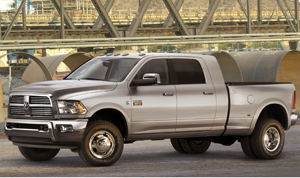
Dodge Ram 2500 Mega Cab

(20 points)
Dodge Ram 2500 Mega Cab Express
The Dodge Ram 2500 Mega Cab is a bit of a gas guzzler.
The heart of this Dodge monster truck is a Cummins engine that runs on diesel and is turbocharged, both of which no doubt account for putting the Ram's mpg numbers in the double and not single digits (13/18 city highway).

Consider that this massive dually can pull 16,800 lbs. That's roughly the weight of well-equipped 35-foot luxury motorboat that surely would fare even worse on this list of eco-violators.

Ford F-250; Ford F-150 Raptor; Ford Expedition/Lincoln Navigator

(20 points for the F-250, F-150 Raptor; 23 points for the Expedition/Navigator)
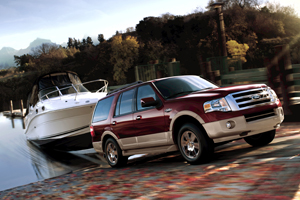
                                                                        Twin land yachts: the Ford Expedition and Lincoln Navigator.
2011 Ford Expedition
This Ford foursome offers a range of low-mileage options for working folks, off-road fanatics and families alike (12/16 mpg for the F-250, 11/14 for the F-150 and 13/18 for the SUV siblings).

Both pickup trucks pack 6.2-liter V8s, the F-250 typically putting that to use on construction sites while the Raptor, true to its name, uses that power for more sporting purposes. Think Baja 1000, with just a few suspension tweaks. Meanwhile, the Blue Oval's Expedition/Navigator duo offers 5.4-liter V8s that cart their occupants around town in upmarket interiors whose added weight no doubt only serve to dock points from its overall score.

Mercedes-Benz ML 63 AMG; Mercedes-Benz G 550

(21 points)
Mercedes-Benz ML63 AMG
The 5,093-lb Mercedes-Benz ML63 gets 11 mpg in the city.
Although both these chiseled SUVs from Stuttgart get an estimated 11/15 mpg city/highway, they are vastly different machines. As the name suggests, this uber-ML has a 6.3-liter V8, 503-hp engine tuned by Mercedes' AMG magicians.

While it can comfortably coddle a family of four, that's not really the point. Instead, this mean-looking variant of the otherwise tame ML is meant to take on BMW's potent X5 M and the spiciest of Porsche's Cayenne variants. Keeping that sort of company isn't something that comes cheap, whether at the dealer or at the pump. The same goes for the G 550, although its image is less boy-racer and more urban assault vehicle stuffed with a 5.5-liter V8.

Sharing the same numerals as Gulfstream's $60 million super-jet, Mercedes' four-wheeled so-called Gelandewagen has roots in military service, to which its still-boxy looks and spartan (if leather-draped) interior pay tribute. If you ever think you'll need to battle not just the morning commute but also desert warlords, this is your vehicle of choice.

Greenercars.org

Share/Bookmark

6 Breakfasts That Fight Fat

Twelve billion. That's the number of breakfast meals we devour each year at America's restaurants. And 80 percent of them come from fast-food or fast-casual restaurants, which means we have no idea what’s really in them. As we've been demonstrating since 2007, sometimes this means pastries packed with more sugar than an ice cream cone, sausage patties with more fat than a double cheeseburger, and omelettes with enough sodium to pickle a barrel of cucumbers.

Don’t get me wrong—we need a complete breakfast to help us power through the day. Skipping it means you're 450 percent more likely to end up overweight or obese, according to recent studies.

That's why we devote more than 50 pages to this crucial meal in the new Eat This, Not That! No-Diet Diet book, which takes all the food and nutrition secrets we've championed the past few years and turns them into an effortless, delicious, flat-belly-fast plan that works for everyone—and keeps your weight off for good!

Here's an exclusive peek inside. These healthy, delicious breakfasts will keep your belly full and flat at the same time.

BEST BREAKFAST SANDWICH

Panera Power Sandwich Panera Bread Breakfast Power Sandwich
330 calories
14 g fat (6 g saturated)
830 mg sodium

Panera’s menu provides plenty of opportunity to ruin your morning, but with this sandwich the chain has hit all the right keys. Ham, egg, and cheese are arguably the best breakfast-sandwich stuffers known to man, and instead of the starchy bagels and ciabatta used on most of the menu, this one is built with whole-grain bread. That brings in 4 grams of belly-filling fiber, and along with the 23 grams of protein, it’s enough to ensure you stay full until lunch!

Not That!
Asiago Cheese Bagel Breakfast Sandwich with Sausage
640 calories
31 g fat (14 g saturated, 0.5 g trans)
1,130 mg sodium

Your Eat This, Not That! No-Diet Diet savings: 310 calories, 17 grams of fat, and nearly a half day’s worth of saturated fat!

Bonus Tip: Did you know that you can shave up to 1.8 inches off your waistline by regularly eating breakfast, according to one recent study.

BEST OMELETTE

IHOP Omelette IHOP Simple + Fit Spinach, Mushroom & Tomato Omelette w/ Fresh Fruit
330 calories
12 g fat (5 g saturated)
690 mg sodium

Omelettes can be a healthy and delicious start to the day, but the tendency at chain restaurants is to befoul them with copious amounts of cheese and a butcher shop’s worth of meat. IHOP’s Simple + Fit Omelettes are made the way all omelettes should be—with simple, fresh ingredients that, in this case, give you 5 grams of fiber and 28 grams of protein. Which of course begs the question: Why does the chain still have the 910-calorie Hearty version on its menu? Steer clear.

Not That!
IHOP Hearty Spinach and Mushroom Omelette
910 calories
71 g fat (26 g saturated, 1 g trans)
1,580 mg sodium

Your Eat This, Not That! No-Diet Diet savings: 580 calories, 890 mg of sodium, and an entire day's worth of both fat and saturated fat!


BEST ON-THE-GO OATMEAL

Jamba OatmealJamba Juice Fresh Banana Oatmeal
370 calories
5 g fat (1 g saturated)
33 g sugars

Whole grains have been shown to help with weight loss, and the whopping 8 grams of fiber this meal delivers will subdue even the most ravenous of stomachs. That’s more than can be said for many of the smoothies on the Jamba Juice menu.

Not That!
Ideal Meal Chunky Strawberry (16 oz)
570 calories
17 g fat (2.5 g saturated)
54 g sugars

Your Eat This, Not That! No-Diet Diet savings: 200 calories, 12 grams of fat, and five teaspoons of sugar!

BEST ON-THE-GO BREAKFAST WRAP

Dunkin' Donuts Wake-Ups Wraps Dunkin’ Donuts Egg & Cheese Wake-Up Wrap
180 calories
11 g fat (4 g saturated)
470 mg sodium

Sure, the doughnuts and pastries are tempting, but they're not on Dunkin's DDSmart Menu for a reason: They're dumb choices. The Wake-Up Wraps are a smart choice, and even if you order two of them you’ll be amply rewarded with 16 grams of protein. What do you get for eating two doughnuts? A mid-morning sugar crash and hunger pangs. Even the Sausage and Egg Croissant below is a better choice than doughnuts, but no one should eat 46 grams of fat for breakfast.

Not That!
Sausage and Egg Croissant
680 calories
46 g fat (18 g saturated, 0.5 g trans)
1,280 mg sodium

Your Eat This, Not That! No-Diet Diet savings: 500 calories, 35 grams of fat, and nearly three-quarters of a day's worth of saturated fat!

BEST STEAK & EGG SANDWICH

Subway Steak, Egg, and Cheese Muffin Melt
190 calories
17 g fat (2.5 g saturated)
600 mg sodium

Hats off to Subway for the line of Muffin Melts that debuted last year. These svelte sandwiches are some of the lowest-calorie breakfasts in the world of fast food. Order two and this combo provide 12 grams of fiber and 32 grams of protein—and you still get to enjoy a steak-and-eggs breakfast for less than 400 calories. That's no small feat.

Not That! 
6” Breakfast BMT
560 calories
28 g fat (11 g saturated, 0. 5 g trans)
1,940 mg sodium

Your Eat This, Not That! No-Diet Diet savings: 370 calories, 11 grams of fat, and 1,340 mg of sodium! 
BEST ON-THE-GO BREAKFAST MEAL

McDonald's Breakfast McDonald’s Egg McMuffin with Hash Brown and Coffee
450 calories
21 g fat (6.5 g saturated)
1,130 mg sodium
I know what you’re thinking: a hash brown! Well, sure. Alongside a lean, protein-packed sandwich like an Egg McMuffin, a hash brown isn’t such a bad choice—though you can cut 300 mg of sodium from this meal if you skip it. The Egg McMuffin itself looks and tastes indulgent, but in truth it’s one of the healthiest sandwiches out there (especially compared to those that made our list of these 30 Worst Sandwiches in America). You're saddled with less saturated fat than you'd get from just one of McDonald’s breast-meat Chicken Selects, and it packs in 2 grams of fiber. So enjoy—guilt free.

Not That!
Big Breakfast with Hotcakes and Regular Size Biscuit
1,090 calories
56 g fat (19 g saturated)
2,150 mg sodium

Your Eat This, Not That! No-Diet Diet savings: 640 calories, 35 grams of fat (13.5 saturated), and a half-day's worth of sodium!

Share/Bookmark

Forever foods: 9 Cooking Staples That Can Outlast You

(Photo: jupiterimages)Most weeks, you make a big grocery list and head to the store, prepared to buy loads of fresh food to make your family's meals. We often don't give a thought to stuff sitting in the kitchen cupboard or we automatically throw out anything that's been in there longer than we can remember.

But Janice Revell, co-founder of StillTasty.com, says "Look in your pantry and your cabinets and check whether the items really do need to go. You'll be shocked by what you really don't need to throw away."
So before you throw out that years-old sugar or replace that bottle of vanilla that's been gathering dust, consult this list of "forever foods." You may be surprised how many of your kitchen staples have a shelf life of decades — even after they've been opened.

1. Sugar

Regardless of whether your sugar is white, brown, or powdered, it will never spoil because it doesn't support bacterial growth.

The challenge with sugar is to keep it from hardening into chunks. To keep sugar fresh, store it in an airtight container or seal it in a plastic bag. If your brown sugar is more like a brown rock, you can revive it with just a minute in the microwave on low heat.

2. Pure vanilla extract

If you have pure vanilla extract in the back of the cupboard, there's no need to throw it out because it lasts forever. It may be more expensive than its imitation counterpart, but its shelf life certainly outweighs the extra cost.

Keep that vanilla flavor at its best by sealing the botttle after each use and storing it in a cool, dark place.

3. Rice

White, wild, jasmine, arborio and basmati rice all keep forever so there's no need to throw them out. Brown rice is the one exception because it has a higher oil content so store it in the refrigerator or freeze it to maximize its shelf life. Once you've opened a bag or box of rice, move it to an airtight container or resealable freezer bag to keep it fresh.

4. Corn starch

You can thicken gravies and sauces for years with just one box of corn starch because it keeps indefinitely. Store this kitchen staple in a cool, dry area and be sure to reseal it tightly after each use.

5. Honey

Whether you use it in your tea, on your toast or as an alternative sweetener, that jar of pure honey is good forever. It may get grainy or change color, but it's still safe to eat — and delicious — because its antibiotic properties keep it from spoiling.

You can help keep it fresh by storing it in a cool area, and you can improve the quality of crystallized honey by placing the jar in warm water and stirring it until the grainy parts dissolve.

6. Salt


The contents of your salt shaker will never spoil, regardless of whether it's basic table salt or sea salt. Simply store it in a cool, dry place and salt will keep indefinitely.

7. Corn syrup

If you come across a years-old bottle of corn syrup in your pantry, don't throw it out. This sweetener keeps indefinitely as long as you keep it sealed and store it in a cool, dry area.

8. Maple syrup

What good are pancakes or waffles without maple syrup? Luckily, this flavorful syrup will never spoil if you refrigerate it or freeze it. For long-term storage, seal it in an airtight plastic container and freeze it.
"The freezer is such a useful tool that can really save you money because there are very few foods that don't freeze well,".

9. Distilled white vinegar

This wonder product can be used for everything, from making marinades and salad dressings to cleaning house and doing laundry. But the best thing about distilled white vinegar is that it lasts for years. Simply close it tightly after each use and store the bottle in a cool, dark place.

Share/Bookmark

Which Songs Were Played Most At Sporting Events Last Year?

A song written before most professional athletes were born was played more than any other at sporting events last year. According to music licenser BMI, Queen's "We Will Rock You" topped the list of sports anthems during the 2009-2010 season. The track, written in 1976, beat out newer songs by Lil' Wayne and Nickelback for the top spot.


• If you want to have your song played at sporting events, it helps to have "rock" or "burn" in the title. Make a track called "Burning Rock" and you're set. 


• Though I had never heard the Sean Kingston or Nickleback songs prior to five minutes ago, I can see the mass appeal they might have for large, family-based audiences. Kingston, like the Black Eyed Peas, provides high-energy beats with safe lyrics, while Nickelback gives off a large-stadium sound and isn't Creed. But for the life of me, I can't figure out what allures stadium DJs to the Christina Aguilera and Missy Elliott remake of "Car Wash." It was bad in the '70s and it's bad now. 

• Speaking of "Car Wash," it's the No. 1 song played at baseball stadiums. (How? Why? Are teams running car wash promotions in the parking lot? Does Armor All have a secret licensing deal with MLB? Did Rose Royce, the track's original singer, play baseball? Somebody needs to explain this to me.)

• The NFL favored "We Will Rock You." The song "Twilight Zone" (you may not recognize the name, but you've heard it) was most popular in the NHL, which is fitting given that hockey always seems to be about 15 years behind the times. 

• "Machinehead" is a good tune, but it's hard to believe it's played more than Metallica's "Enter Sandman," which seems to introduce dozens of college football teams and baseball relievers every year. Similarly, no "Welcome to the Jungle," "Don't Stop Believin'," "Let's Get It Started" or that "I like to move it, move it" song?

• Super Bowl performers Christine Aguilera and the Black Eyed Peas both made an appearance on the list. If I'm Kevin Rudolf or Soulja Boy, I'm not holding my breath for invites to next year's game, though.

Share/Bookmark